Learn / Life on the Farm / Why Do Farmers Move Cattle From Pasture to Pasture?
Life on the Farm
Why Do Farmers Move Cattle From Pasture to Pasture?
Moving the herd gives a farmer control over grazing. What matters just as much is what happens after the cattle leave.
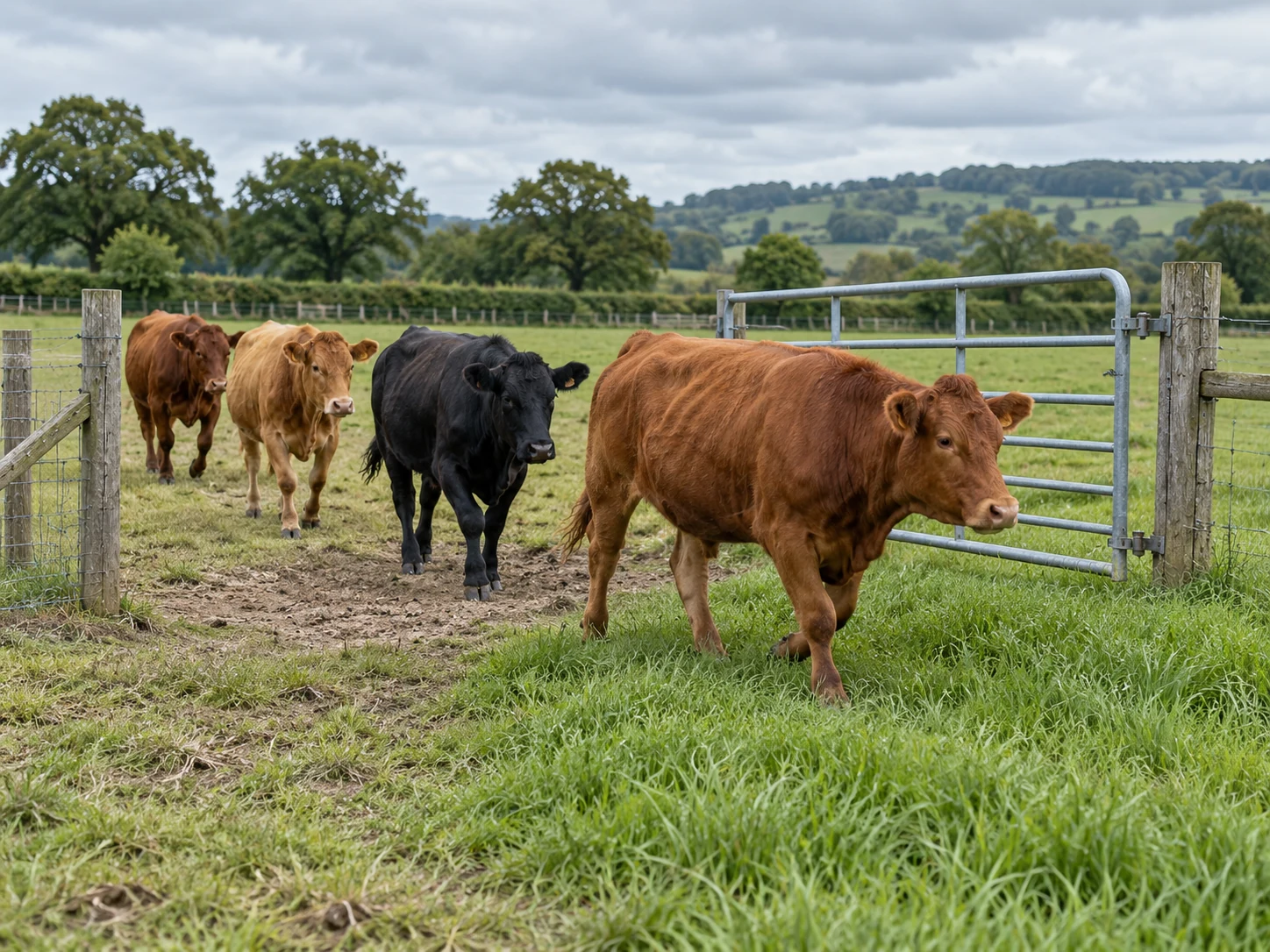
A fence opens, cattle walk into fresh grass, and the paddock behind them gets a rest. That is the basic idea behind rotational grazing: farmers control where animals graze and when they return. The aim is to match the herd’s feed needs to available forage while giving grazed plants time to recover. [1, 2]
Why leave one paddock for another?
Cattle choose what they eat. With continuous access to a large field, they may return repeatedly to favorite plants while leaving other areas relatively untouched. A plant bitten again before it has rebuilt enough leaves and reserves can weaken over time. [2, 3]
Dividing the pasture into paddocks gives the farmer more control over that pattern. Animals graze one area for a limited period, then move elsewhere while the plants regrow. The fence helps manage access; the farmer still has to judge how much forage is available and how much to leave behind. [1, 2]
The next move starts with looking at the grass
There is no universal daily move or fixed 30-day rest period. Plant species, temperature, rainfall, season and grazing intensity all affect recovery. NRCS specifically notes that recovery periods change with season and moisture. [2]
Remaining green leaves capture sunlight and support regrowth. Removing too much leaf area, or bringing cattle back before plants recover, can undermine the system even if the animals move frequently. A simpler system with fewer paddocks can work well when forage supply and animal demand stay in balance. [2, 3]
Forage quality changes as plants mature, too. Oklahoma State University Extension describes improved forage use and persistence of desirable plants as potential benefits of rotational grazing. Those benefits still depend on stocking rate and management. [3]
This makes the routine a series of decisions: how much feed is here, how the herd is doing, and whether the next paddock is ready. The calendar helps organize the work; it cannot make those decisions on its own.
Water and fences are part of the feeding plan
A move only works if the next paddock can meet the animals’ needs. That can require temporary or permanent fencing, gates, lanes, pipelines and water tanks. Water must be accessible and the supply must keep up with the herd. [1, 6]
The arrangement also affects where cattle spend their time. Water and shade can draw animals toward particular areas. Paddock design and water placement therefore matter alongside the grass itself. [1, 6]
Heat changes the plan. University of Nebraska–Lincoln guidance emphasizes dependable water, airflow and appropriate shade or other heat protection. It also advises care with the timing of cattle movement during hot weather. [6]
More intensive systems can mean more fence checks, moves and water infrastructure. Oklahoma State notes that individual animal performance can sometimes decline even when forage use per acre improves. More paddocks are an investment and a management choice, rather than a score of how good a farm is. [3, 7]
What does the research show?
A 2025 review examined 15 studies of rotational grazing in beef systems. It found consistent benefits for plant productivity, while soil-health and greenhouse-gas findings were mixed and evidence for changes in plant diversity was limited. These findings do not establish rotation as an automatic climate solution. [4]
A separate 2021 study compared 52 ranches arranged in matched pairs in western Canada. Adaptive multi-paddock grazing was associated with higher water infiltration than conventional management on neighboring ranches. Longer rest-to-grazing ratios early in the growing season and greater plant litter were among the factors linked to infiltration. This was an observational comparison under those conditions, not a guarantee for every rotated pasture. [5]
What a grazing description can tell you
“Rotationally grazed” describes how access to pasture is managed. It does not establish that cattle were grass-finished, identify every feed they received, or certify animal welfare. Nutrition, water, minerals, health care and protection from weather still need attention. [6]
The most revealing detail in a farm story may be what changed the plan: slower regrowth, wet ground, hot weather or a shortage of forage. Understanding how the farmer responds tells you more than counting fences or watching one move.
The gate opening is the visible moment. Observing the herd and giving plants enough recovery are the work behind it.
Sources and further reading
- Livestock and Pasture Management. USDA Natural Resources Conservation Service.
- Soil Health on Pastureland. USDA Natural Resources Conservation Service.
- Rotational Grazing is More than Just Moving Cattle. Oklahoma State University Extension · 2026.
- A scoping review on the impact of rotational grazing in beef cattle systems on greenhouse gas emissions, soil health, plant diversity, and plant productivity parameters. Sanguinetti and colleagues · Canadian Journal of Animal Science · 2025.
- Adaptive multi-paddock grazing improves water infiltration in Canadian grassland soils. Döbert and colleagues · Geoderma · 2021.
- Heat Stress in the Pasture. University of Nebraska–Lincoln Beef Extension · 2026.
- Plan Grazing Management Using the Oklahoma Grazing Stick. Oklahoma State University Extension.