Good food begins
with how we care.
For the land. For the animals. For the people around the table.
The Simply Raised Standard.
How an animal lives, what it eats and where food comes from should be easier to understand. That is the thinking behind the Simply Raised Standard.
Our framework is in development. It is our own approach, not an independent certification.
Care suited to the animal.
We’re developing an approach that considers shelter, water, handling and opportunities for natural behavior. What that looks like needs to reflect the animal and its needs.
Living conditions and feed tell different stories.
Our framework considers nutrition suited to each species, with feeding claims explained separately. Pasture access describes where animals spend time; it does not tell the whole feeding story.
Our standards,
in plain language.
These are the principles guiding the food we’re developing. Care for the animal, appropriate feed and a clear connection to the farm belong together. The details vary by product—and each claim needs records behind it.
- Pasture-Raised
- Care and outdoor living
- Our pasture-raised direction brings together outdoor vegetation, opportunities for natural behavior, suitable shelter, water and daily care. We’re developing species-specific farm requirements, including how pasture access is managed.
- 100% Grass-Fed & Grass-Finished
- Our beef direction
- For beef, our direction is forage feeding after weaning, all the way through finishing. Grass-finished means there is no grain-finishing period. Farm and feeding records would need to support both parts of that promise.
- Non-GMO Fed
- Know what goes into the feed
- Our sourcing direction includes non-GMO feed alongside balanced nutrition suited to the animal. Feed sourcing and records must support the Non-GMO Fed statement on each product. Pasture access is a separate requirement to document.
- Certified Organic
- A distinct certified product line
- We plan both organic and non-organic lines. A product would be labeled Certified Organic only with the required certification. Organic status is separate from our animal-care, pasture and feeding requirements.
How does this compare with cage-free and free-range?
For our egg direction, we look at foraging, perching, nesting and dust bathing alongside shelter and balanced feed. The wording on a label should make those practices clear.
In USDA’s voluntary shell-egg grading program, cage-free hens can move freely indoors, while free-range hens also have outdoor access during their laying cycle. Check the applicable program for the conditions behind the claim. Neither term, by itself, establishes organic certification.
Simply Pasture is in development. These principles guide sourcing; final supplier requirements and product-level evidence are still being established.
Look a little closer.
Explore the direction of our developing standards by animal and food. These are not yet completed supplier requirements.
Forage through finishing.
Our grass-fed beef direction centers on pasture and forage feeding after weaning, continuing through finishing without a grain-finishing period.
Proposed evidence: farm identity, applicable care and feed records, product or ingredient specifications, and dated documentation supporting each stated claim.
Room to root and explore.
Our pasture-raised pork direction combines outdoor rooting and foraging with shelter and a balanced ration. Non-GMO feeding is identified separately.
Proposed evidence: farm identity, applicable care and feed records, product or ingredient specifications, and dated documentation supporting each stated claim.
Space to forage.
Our chicken direction brings together outdoor vegetation, suitable shelter, opportunities for natural behavior and nutritionally complete feed. Pasture access and non-GMO feeding describe different things.
Proposed evidence: farm identity, applicable care and feed records, product or ingredient specifications, and dated documentation supporting each stated claim.
Care for the hens.
Our egg direction considers foraging, perching, nesting and dust bathing, alongside shelter and balanced feed. Raising and feeding claims would need to be clear for each product.
Proposed evidence: farm identity, applicable care and feed records, product or ingredient specifications, and dated documentation supporting each stated claim.
Pasture and everyday cow care.
Our dairy direction combines grazing access with water, shade, resting space and appropriate nutrition. Pasture-raised does not automatically mean grass-fed, organic or Non-GMO Fed.
Proposed evidence: farm identity, applicable care and feed records, product or ingredient specifications, and dated documentation supporting each stated claim.
Follow the ingredients.
Our approach to meals, deli, snacks and breakfast foods would consider the sourcing of their ingredients. A claim about one ingredient does not automatically describe the whole food.
Proposed evidence: farm identity, applicable care and feed records, product or ingredient specifications, and dated documentation supporting each stated claim.
From the package,
back to the pasture.
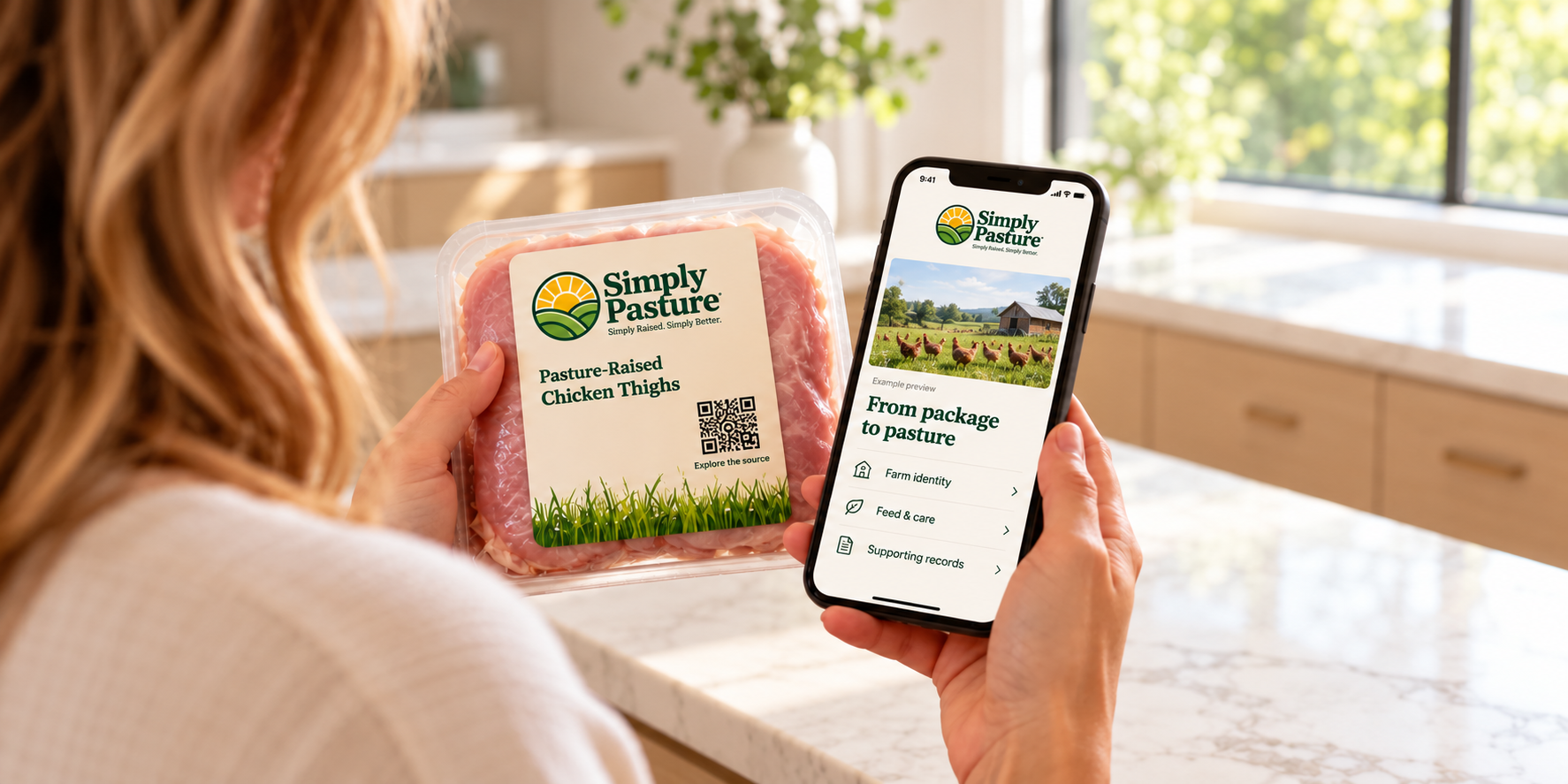
The QR experience we’re developing would connect a product to its farm identity, care information and supporting records.
Product and phone illustration. This is not a functioning traceability record or a confirmed supplier.
A clearer connection.
What would a farm identity show?
The aim is to identify the farm and sourcing information relevant to a particular food. Actual supplier records are not yet available.
What information would support a claim?
Farm records, feeding information and applicable certifications would need to support the claims made about that food.
Explore an illustrative beef farm · All example farms
Example profiles demonstrate the idea; they do not identify Simply Pasture suppliers.
Simply Raised.
Simply Better.
Explore the foods—and the thinking behind them.
Explore Our Products Our Impact