
FICTIONAL BEEF FARM
Alder Bend Farm
A closer look at the pasture.
At Alder Bend, opening a gate means thinking about two places: the pasture the herd is leaving and the one it is moving into. This example follows the choices behind a forage-based herd.
Alder Bend Farm is fictional. Its name and story are part of a concept demonstration; it is not a Simply Pasture supplier and does not identify the source of a product.
Setting in this example
Connected pastures with gates between grazing areas.
Story focus
Grazing decisions, pasture recovery and stored forage.
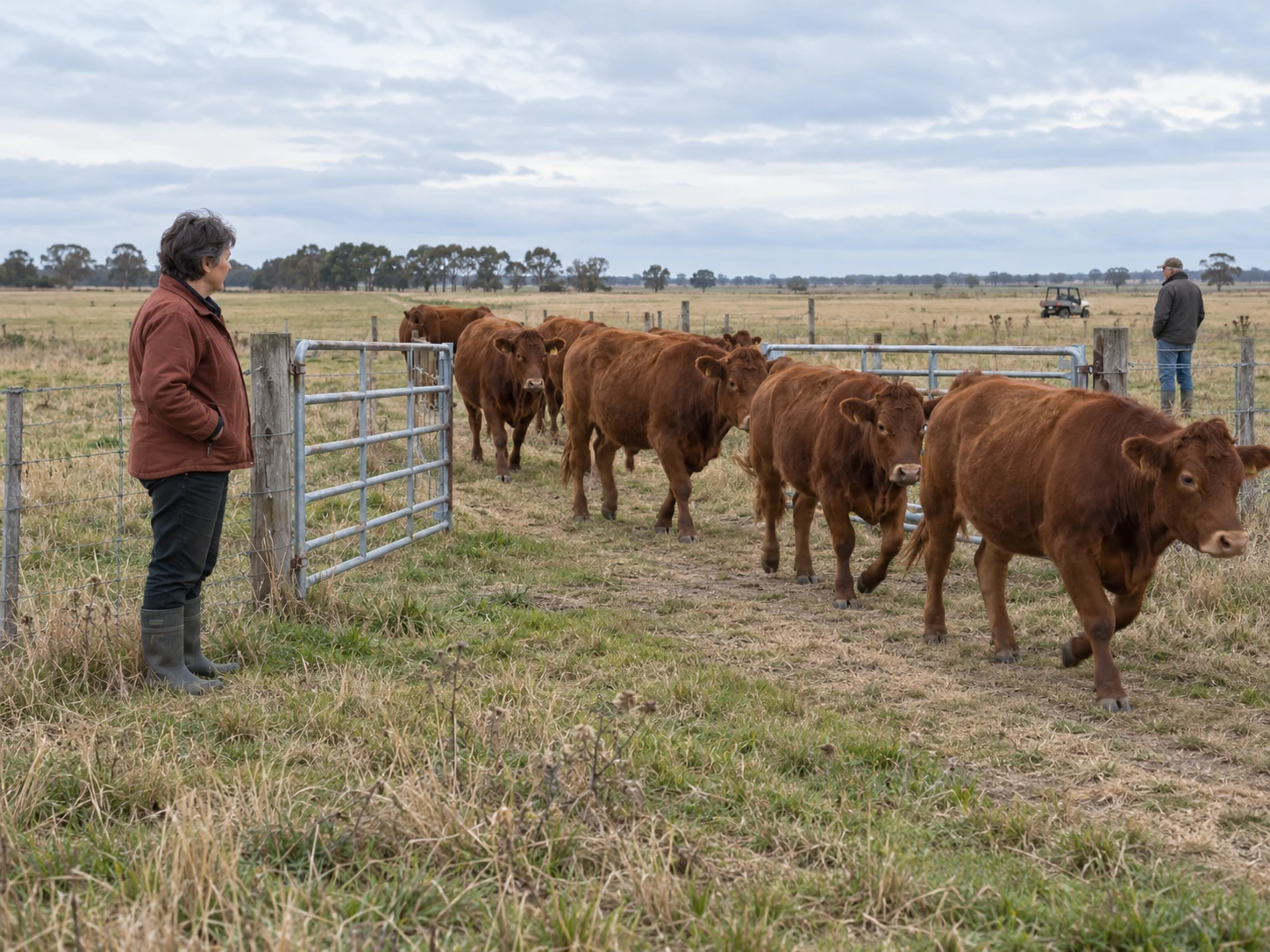
Illustrative example farm scene; not a Simply Pasture partner.
Why open this gate today?
Moving cattle is also a decision about the pasture they leave behind. Leaving enough forage and allowing plants time to recover are important parts of managed grazing. The next move depends on what is available to eat and how the pasture is recovering.
What happens when the grass stops growing?
The feeding story continues beyond a green field. Stored forage, such as hay, can help feed cattle when pasture growth slows. Planning means checking both how much feed is available and whether it meets the herd’s needs.
What gets checked on a farm round?
Water
Is water available and accessible wherever the cattle are grazing?
The herd
Are cattle moving and eating normally? Does an animal need a closer look?
The pasture
How much forage remains, and which areas need more time to recover?
Read more: How farmers decide when to move cattle.
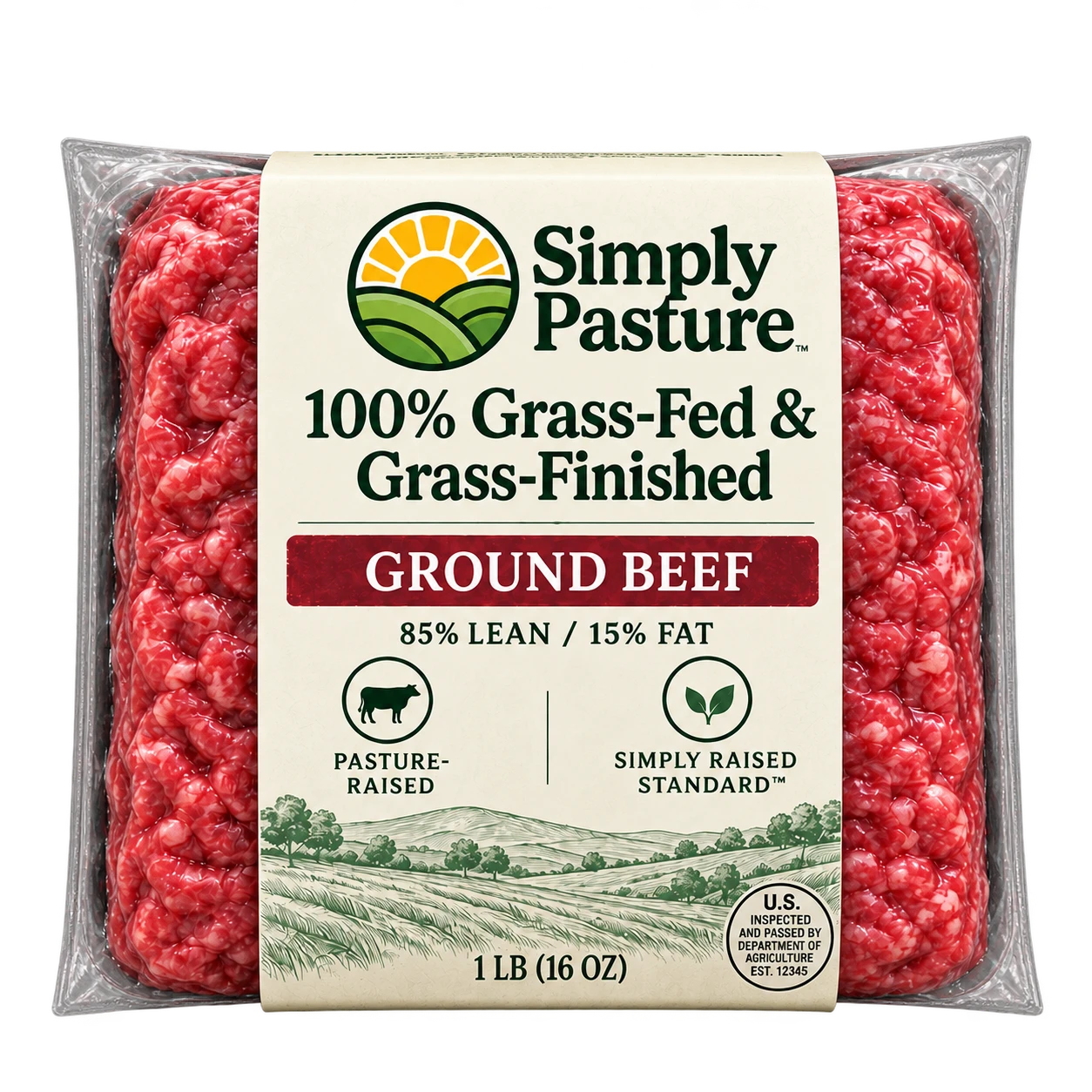
Explore the Ground Beef concept.
See the Ground Beef product concept alongside Alder Bend’s fictional farm story.
This example does not identify a supplying farm or trace a product batch.
Knowing the farm means following the connection.
A farm story explains how food is raised. Traceability connects that story to a particular product through identified farms and supporting records. Simply Pasture’s product-to-farm connections are still in development.
OTHER FICTIONAL FARMS