
Learn / Living Land / Why Keep Soil Covered?
Living Land
Why Keep Soil Covered?
Last season’s stalks and leaves can still have a job to do: protecting the ground while the next crop gets started.
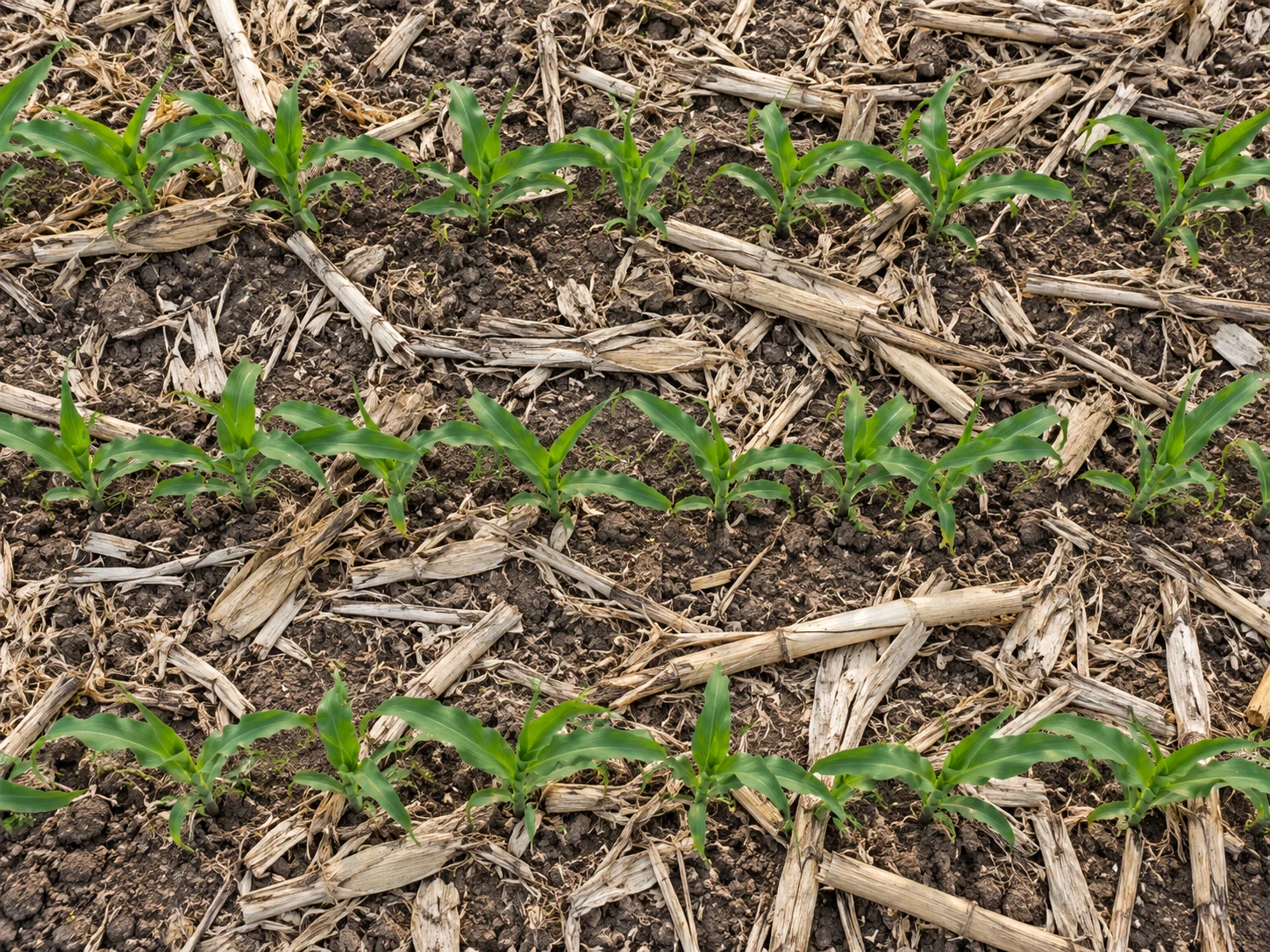
An empty field can look tidy after harvest. To the soil, it means exposure: rain strikes the surface directly, wind can move loose particles, and sun and air draw away moisture. Leaving plants or crop residue over the ground gives that surface protection. [1, 2]
NRCS sometimes calls this “soil armor.” It might be a growing crop, a cover crop planted between harvests, old stalks and leaves, or a combination. A brown field with residue can have useful cover even when it is not green. [2, 3]
Start with one raindrop
When a raindrop hits bare soil, its impact can break apart small clusters of particles called aggregates. Detached particles are easier to carry away. They can also help form a surface seal that makes later rainfall harder to absorb. [2]
Leaves and residue intercept some of that energy. Cover can reduce erosion, moderate soil temperature and slow evaporation. Cover crops extend this protection into periods when a field would otherwise be left without a growing crop. [2, 3]
That is why stalks left after harvest can be doing useful work. They are part of the surface protection for the next season.
Living cover uses water, too
Residue can reduce direct evaporation from the soil. A living cover crop also uses water as it grows. These effects happen together, which makes timing important. [2, 4]
In a wet spring, growth may help dry a field before planting. In a dry spring, leaving the same cover crop growing too long may use moisture needed by the next crop. University of Minnesota Extension advises watching soil moisture and stopping cover-crop growth before it competes seriously for water, light or nutrients. Farmers call that step termination. [4]
Choosing when to stop the cover crop is therefore part of managing it. The farmer is balancing protection and growth against the needs of the following crop.
Shade is helpful in summer—and different in spring
Cover shields the soil from direct sun and rapid temperature changes. During hot weather, that can keep the surface cooler and reduce moisture loss. [1, 2]
In cooler regions, residue can also slow spring warming. Penn State lists delayed warming and water use in dry conditions among possible cover-crop costs. Species, planting dates and the timing of termination need to fit the local growing season. [5]
Residue and roots do different jobs
Old plant material protects the surface and contributes organic material as it breaks down. Living roots continue another process: plants release carbon compounds around them that support microorganisms and nutrient cycling. NRCS treats soil cover and continuous living roots as separate, connected principles. [1]
A field can have plenty of residue but no living crop for part of the year. Winter cover crops or perennial plants can extend the growing-root period where they fit the rotation. Looking at both the surface and the growing season gives a fuller picture than simply checking whether the field is covered.
On rangeland, the amount of cover matters
Grazing land also needs protection from exposure. NRCS’s rangeland guidance uses “optimize soil cover” because too much accumulated dead vegetation can cause problems in some settings, including interfering with water movement and plant growth. This is guidance for rangeland conditions, not a reason to remove useful cover from every pasture. [6]
Grazing management has to balance the forage animals consume with the protection and recovery plants need. The appropriate amount left behind varies with vegetation, weather and the site.
Cover is a planned part of the season
A cover crop brings seed costs, planting work and a plan for ending its growth. Farmers may choose it for erosion control, nutrient management, grazing or weed suppression. Those goals influence what they grow and how they manage it. [3, 5]
A useful farm story explains what happens between crops or grazing periods. Leaving residue, growing a winter cover and allowing pasture to recover are different decisions, each with a place in the calendar.
So the next time a field looks a little untidy, look closer. Some of what remains from the previous season may be protecting the ground for the next one.
Sources and further reading
- Soil Health Management. USDA Natural Resources Conservation Service.
- Soil Health: Principle 1 of 4 – Soil Armor. USDA Natural Resources Conservation Service, North Dakota.
- Cover Crops for Soil Health. USDA Natural Resources Conservation Service.
- Spring Management of Cover Crops. University of Minnesota Extension.
- Economics of Cover Crops. Penn State Extension · 2023.
- Soil Health on Rangeland. USDA Natural Resources Conservation Service.