Learn / Understanding Labels / Grass-Fed vs. Grass-Finished: What the Label Actually Tells You
Understanding Labels
Grass-Fed vs. Grass-Finished: What the Label Actually Tells You
Two familiar terms, one important distinction: read the whole feeding claim, including the finishing stage.
The short version
For U.S. beef labels, an unqualified grass-fed claim covers forage feeding after weaning. Grass-finished alone does not establish the earlier diet. Read the complete claim.
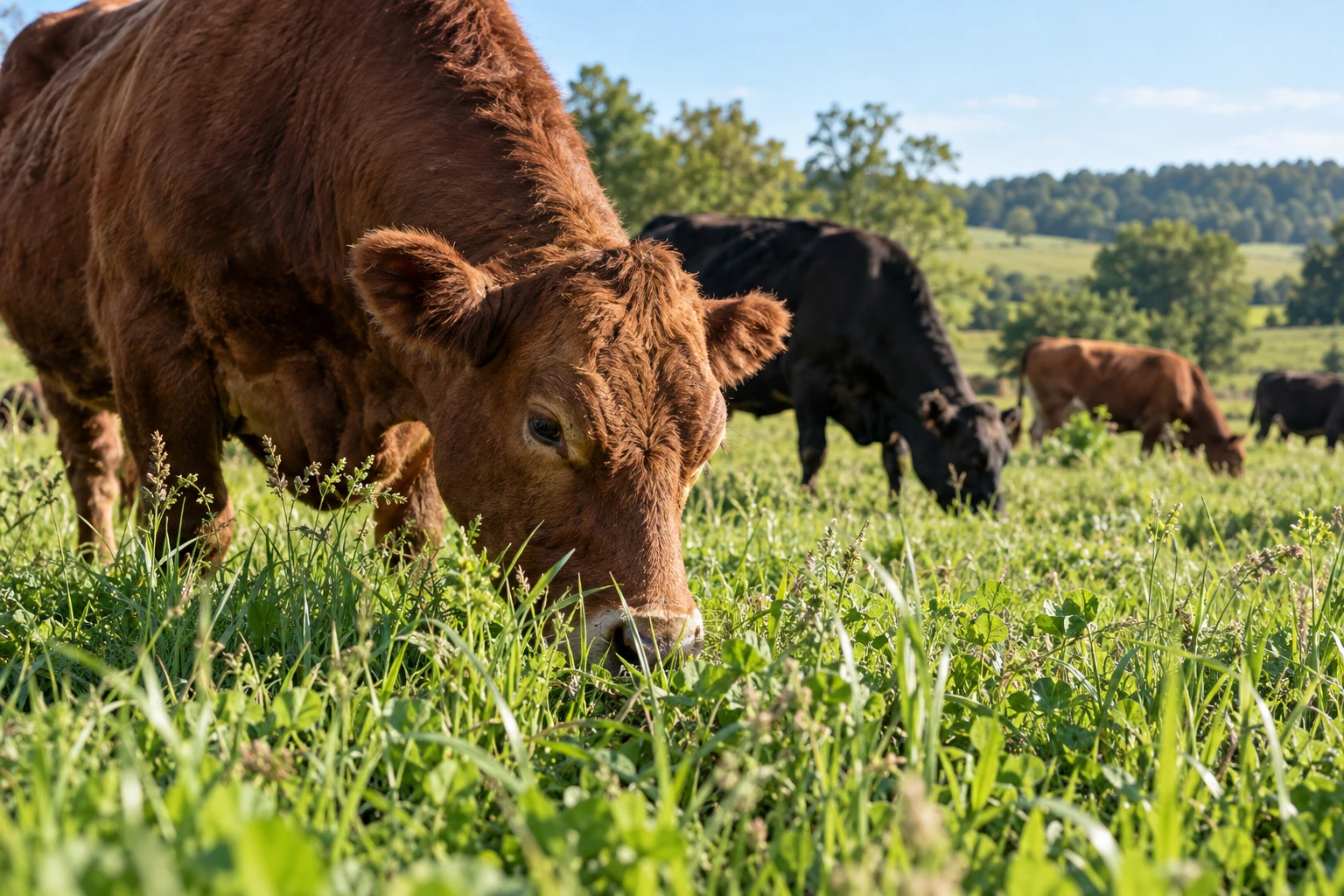
A beef label can fit several farming words into a very small space. To make sense of them, start with one question: what does the claim say about the animal’s diet across its life?
Start with the current U.S. guidance
In its August 2024 guidance, USDA FSIS treats unqualified “grass-fed” and “100% grass-fed” claims as equivalent for cattle meat labels: forage feeding after weaning, with no grain feeding. Milk before weaning is an exception. Forage can include preserved feeds such as hay; it does not mean fresh grass every day. Read the FSIS guidance.
“Grass-finished” describes the finishing stage and does not, by itself, establish the earlier diet. FSIS gives grain feeding followed by grass finishing as an example that needs clear qualification. This is why the complete wording matters more than choosing one appealing word.
Read the sentence around the claim
When comparing two packages, slow down at the asterisk. Does a nearby explanation describe the whole feeding program, or a particular period? Is the explanation easy to find? Can you follow it to a written standard?
We would look for three things: a clearly stated diet, a clear account of the finishing stage, and an identifiable source for the standard. Keep a screenshot or bookmark if you want to compare brands later. That is more useful than trying to remember a row of similar-looking seals in the store.
Keep feed and care in the same conversation
Our view is that a useful food story should also invite questions about the animal’s surroundings and everyday care. Where could it rest? How were changing conditions handled? Who was responsible for checking on it?
Ask those questions alongside the feed question. A short description of what an animal ate should not be asked to do the work of an entire farm profile. We want shoppers to be able to explore both subjects without needing to become label specialists.
Where Simply Pasture stands
Our concept assortment includes the intended claim “100% Grass-Fed & Grass-Finished.” Simply Pasture’s standards and verification process are still in development. This article explains label language; it is not evidence of operating supplier checks or a certification.
As the program develops, our aim is to connect understandable claims to understandable requirements. You should be able to see what a term covers, who checks it and which product it applies to.
Sources
- Substantiating Animal-Raising or Environment-Related Labeling Claims — USDA Food Safety and Inspection Service, 2024