Learn / Food & Nutrition / Does What an Animal Eats Change What We Eat?
Food & Nutrition
Does What an Animal Eats Change What We Eat?
Research on eggs, milk and beef shows why feeding matters—and why one study cannot promise the contents of every package.
The short version
Feeding can change food composition. The size and meaning of a change need evidence for the food and serving being discussed.
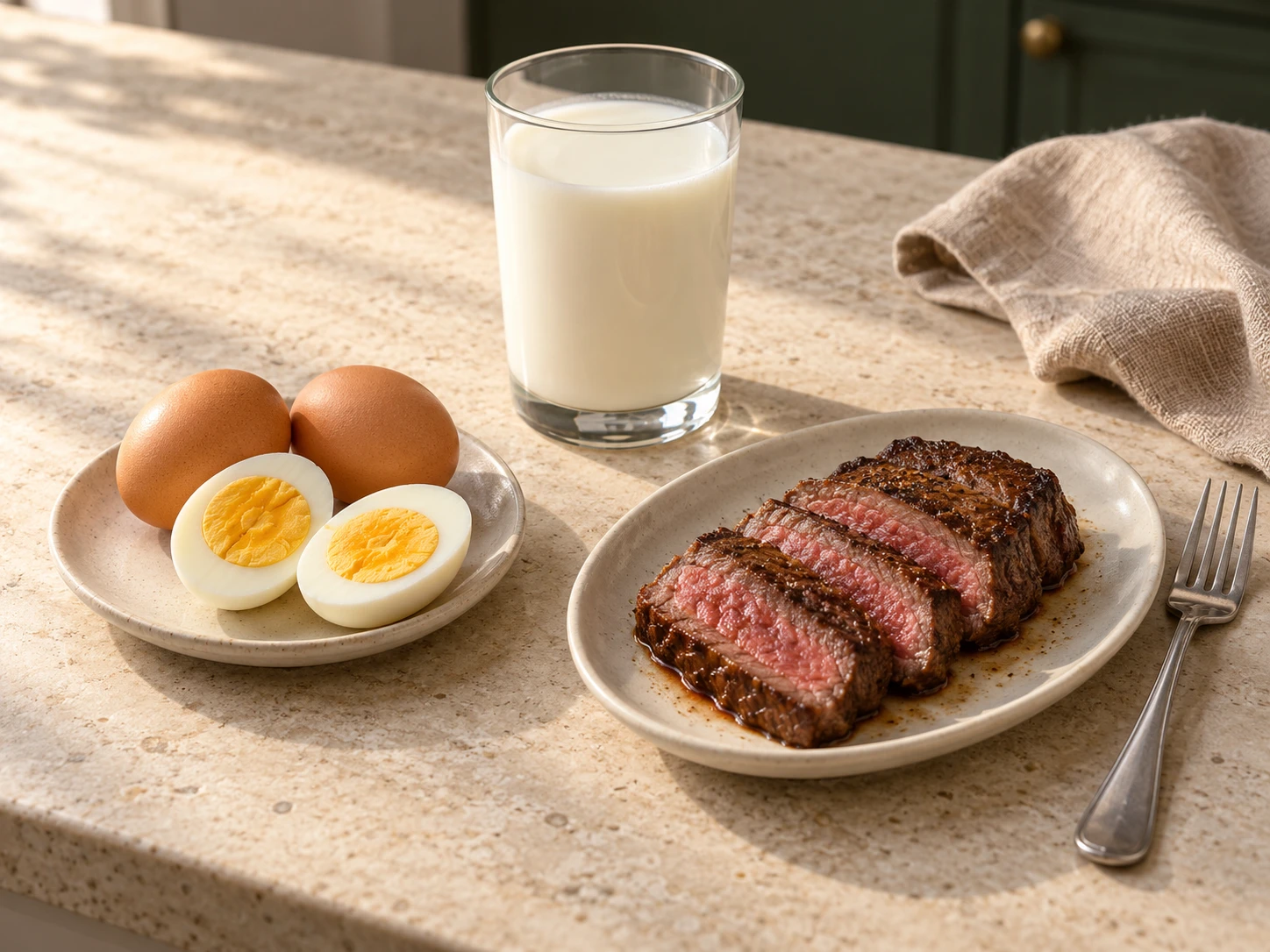
There is a more interesting nutrition question than whether animal foods contain protein: can the way animals are fed change what is in the food?
Research on eggs, milk and beef gives us reasons to pay attention. It also gives us reasons to be precise. A measured difference in food composition is not automatically a demonstrated improvement in someone’s health.
Eggs: a study of pasture and feed
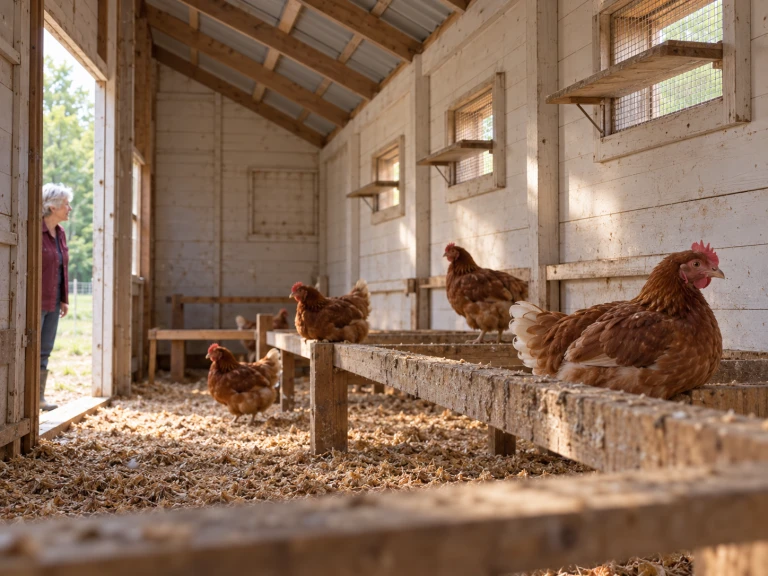
In a six-week experiment, researchers compared eggs from pastured hens receiving supplemental feed with eggs from caged hens eating commercial feed. The pastured group’s eggs had more vitamin E and total omega-3 fatty acids. This compared complete feeding and housing systems, not outdoor access in isolation. It cannot establish a guaranteed value for every pasture-raised egg. Karsten and colleagues, 2010.
Milk: the fatty-acid profile can differ
A 2018 study measured 1,163 milk samples from a nearly all-forage feeding program and compared them with separate organic and conventional milk datasets. Its reported total omega-3 values show why the amount of food matters when reading a comparison.
| Milk group in the research | Total omega-3 |
|---|---|
| Nearly all-forage program | 49 mg |
| Organic comparison dataset | 32 mg |
| Conventional comparison dataset | 20 mg |
These are study values, not Simply Pasture product measurements or guaranteed amounts for every carton. The research compared datasets and modeled dietary intake; it did not test health outcomes in people. Some authors were affiliated with the participating dairy cooperative, which also helped fund the work.
Beef: compare the same kind of measurement
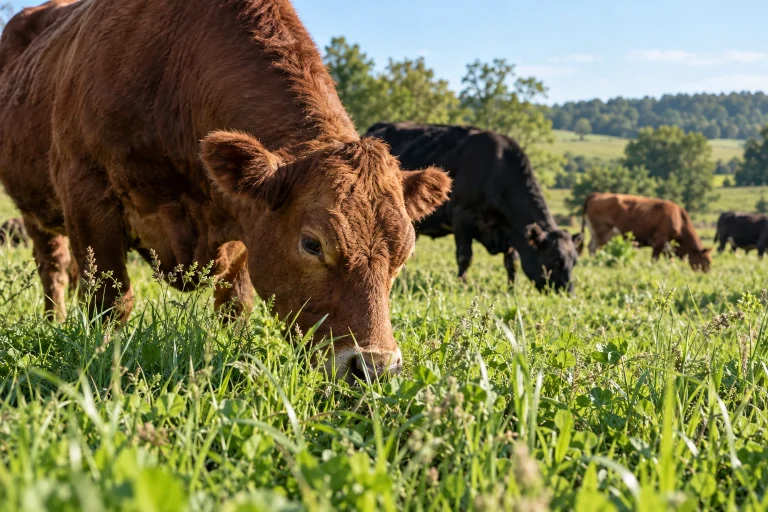
A controlled study of forage and concentrate finishing found differences in beef fat content and fatty-acid composition. The forage-finished beef was leaner and had higher concentrations of several omega-3 fatty acids in that experiment. Those findings describe the cattle, feeds and measurements studied. Duckett and colleagues, 2013.
When reading a comparison, ask whether it reports a percentage of fat, an amount per 100 grams of food, or an amount per serving. Those are different denominators. A large relative difference does not, on its own, tell you how much ends up on your plate.
Three questions make nutrition claims more useful
- What was actually measured: this product, a reference food or a research sample?
- How much food does the number describe?
- Does the evidence measure food composition or a health outcome?
We think a helpful brand should make those distinctions visible instead of leaving readers to search the footnotes.
How we use this research
Simply Pasture’s Nutrition page separates typical-food reference values from product-specific claims. We do not yet have testing that establishes enhanced nutrient levels in Simply Pasture products, and these studies are not evidence that our concept products prevent disease or outperform all alternatives.
Our aim is to help people understand the relationship between feed and food while keeping the evidence attached to the question it can answer.
Sources
- Vitamins A, E and fatty acid composition of eggs — Karsten and colleagues, Renewable Agriculture and Food Systems, 2010
- Enhancing the fatty acid profile of milk through forage-based rations — Benbrook and colleagues, Food Science & Nutrition, 2018
- Effects of forage species or concentrate finishing — Duckett and colleagues, Journal of Animal Science, 2013