Learn / Understanding Labels / Cage-Free, Free-Range and Pasture-Raised Eggs
Understanding Labels
Cage-Free, Free-Range and Pasture-Raised Eggs
Three carton terms to investigate—and the everyday details that help explain them.
The short version
Read a housing claim together with its named standard, rather than treating the words as a complete care score.
The egg aisle is full of short phrases. It is easy to read them as a simple ranking and still leave without knowing much about the hens. A better starting point is to separate the housing question from the details of everyday care.
Ask what each term covers
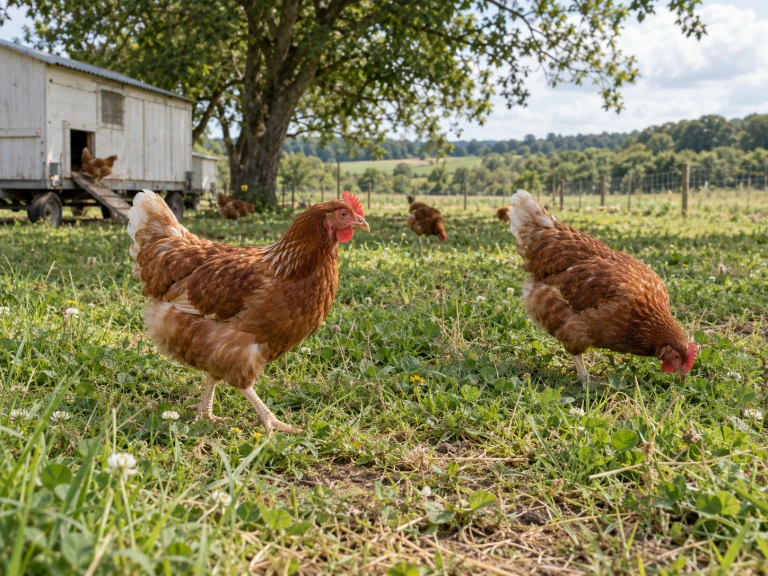
At a basic descriptive level, cage-free concerns freedom from cages; free-range points to outdoor access; pasture-raised points to time on vegetated land. Those brief descriptions are only a starting point. To understand a particular carton, find the requirements attached to its claim.
One example makes the distinction more concrete. Humane Farm Animal Care’s Edition 21 standard specifies at least 2 square feet of outdoor space per hen for its free-range system, and at least 2.5 acres per 1,000 hens for its pasture-raised system. The pasture requirements also include vegetation and a written rotation plan. Access conditions, shelter and other care requirements matter alongside space.
These are requirements of that particular certification program, not a universal rule for every carton using those terms. Simply Pasture is not claiming this certification. Read the laying-hen standards.
A useful way to compare
| Term | Start here | Ask next |
|---|---|---|
| Cage-free | Hens are not kept in cages; this can be an indoor system. | Is outdoor access described separately? |
| Free-range | Look at the outdoor-access requirements. | What space and ground conditions are specified? |
| Pasture-raised | Look at the vegetated outdoor area and how it is managed. | What does the named standard require through the seasons? |
Then look for information about shelter at night and who checks the claim. This gives you something useful to compare even when two cartons use similar photographs. Save the standard’s link if you want to read it at home.
Know what the USDA shield tells you
USDA’s grading shield identifies officially graded eggs meeting the designated quality standard. In that voluntary program, cartons receive label review and cage-free sourcing includes verification and segregation procedures. Quality grading and a complete animal-care story are different pieces of information. Learn about USDA’s graded-shell-egg program.
Look inside the farm story
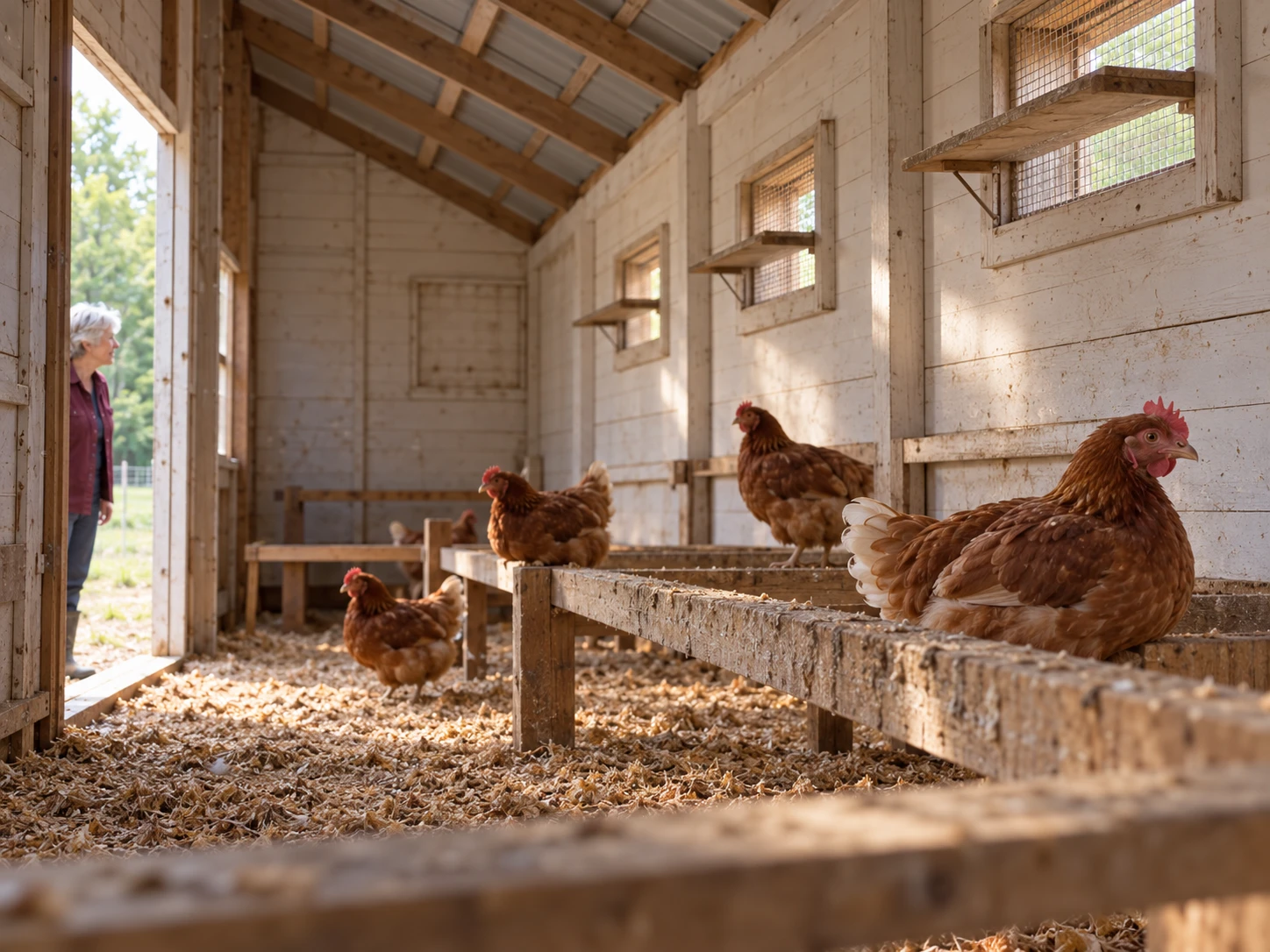
We think an informative story should include ordinary details: the doorway hens use, the place they drink and the house where they settle. These details help a shopper picture daily care without turning the farm into a postcard.
Our example egg-farm profile explores that approach. It is an illustrative concept, not a confirmed supplier or evidence of an operating verification program. Simply Pasture’s own standards remain in development.
Sources
- Egg Laying Hens, Edition 21 — Humane Farm Animal Care
- Cage-Free Verification of USDA Graded Shell Eggs — USDA Agricultural Marketing Service, 2019