Learn / In the Kitchen / A Better Way to Know When Dinner Is Done
In the Kitchen
A Better Way to Know When Dinner Is Done
Where to place a food thermometer, which temperatures to use and why the clock is only a guide.
The short version
Use cooking time as a guide, and check the food’s internal temperature with a thermometer.
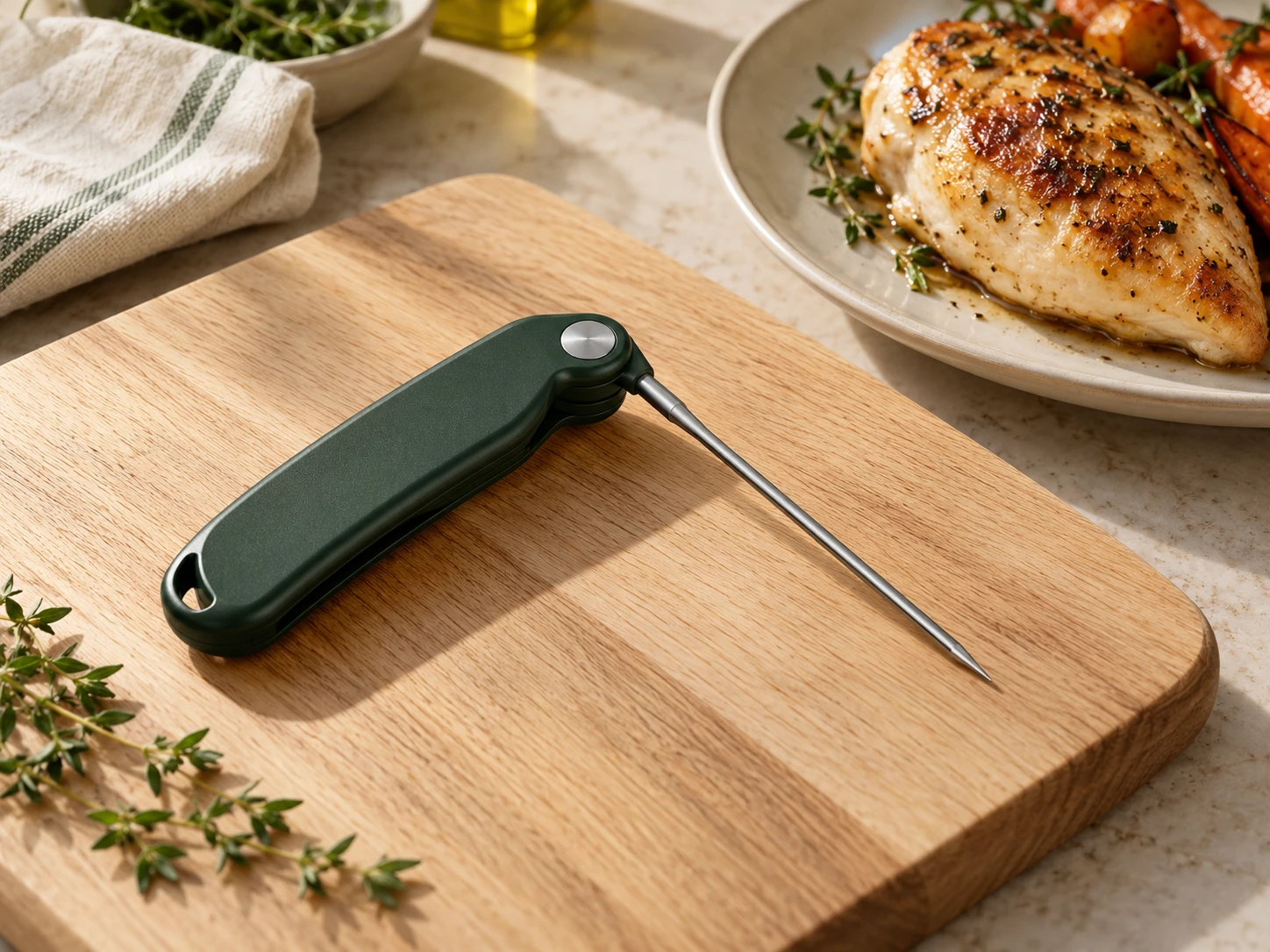
A recipe can tell you when to start checking. A thermometer helps answer whether the food has reached the right internal temperature. The two belong together.
CDC advises checking internal temperature rather than relying on color or texture to judge the safety of meat and poultry. Browning on the outside does not measure what is happening in the center. See CDC’s kitchen guidance.
Take the reading in the right place
Check the thickest part and avoid touching bone. For thin foods, enter from the side so the sensing area reaches the center. Follow your thermometer’s instructions for insertion depth and reading time, and clean the probe between uses. USDA’s thermometer guide.
When cooking several pieces, check more than one. In a tray of chicken thighs, for example, pieces can differ in size and position. If one is ready before the others, use clean utensils and a clean plate to move it while the rest finish.
A short reference for everyday cooking
| Food | Minimum internal temperature |
|---|---|
| Chicken and turkey, including ground poultry | 165°F / 74°C |
| Ground beef or pork | 160°F / 71°C |
| Whole beef, pork and lamb steaks, chops and roasts | 145°F / 63°C, then rest 3 minutes |
| Egg dishes such as frittatas and quiches, without meat or poultry | 160°F / 71°C |
| Casseroles, with or without meat; reheated leftovers | 165°F / 74°C |
These minimum temperatures come from FoodSafety.gov. Follow any applicable package cooking instructions as well.
Make it part of the routine
Before you turn on the stove, put the thermometer where you can reach it. Keep the clean serving plate separate from the plate that held raw ingredients. Read the cooking step once so you know both the suggested checking time and the required temperature.
If the food needs longer, return it to the heat and check again. Write down what happened if you plan to make the recipe again: pan size, piece thickness and the time you actually needed. That turns the next attempt into a more informed one.
Keep the useful information close
Our recipe format puts the internal temperature in the relevant step, where you need it. Prep and cooking times help plan the meal; they are not a substitute for checking the food.
Sources
- Preventing Food Poisoning — Centers for Disease Control and Prevention
- Food Thermometers — USDA Food Safety and Inspection Service
- Safe Minimum Internal Temperatures — FoodSafety.gov