
Learn / Life on the Farm / Who Actually Owns the Chickens on a Chicken Farm?
Life on the Farm
Who Actually Owns the Chickens on a Chicken Farm?
The farm and the flock can belong to different businesses. That changes who supplies the feed, makes decisions and carries the risk.
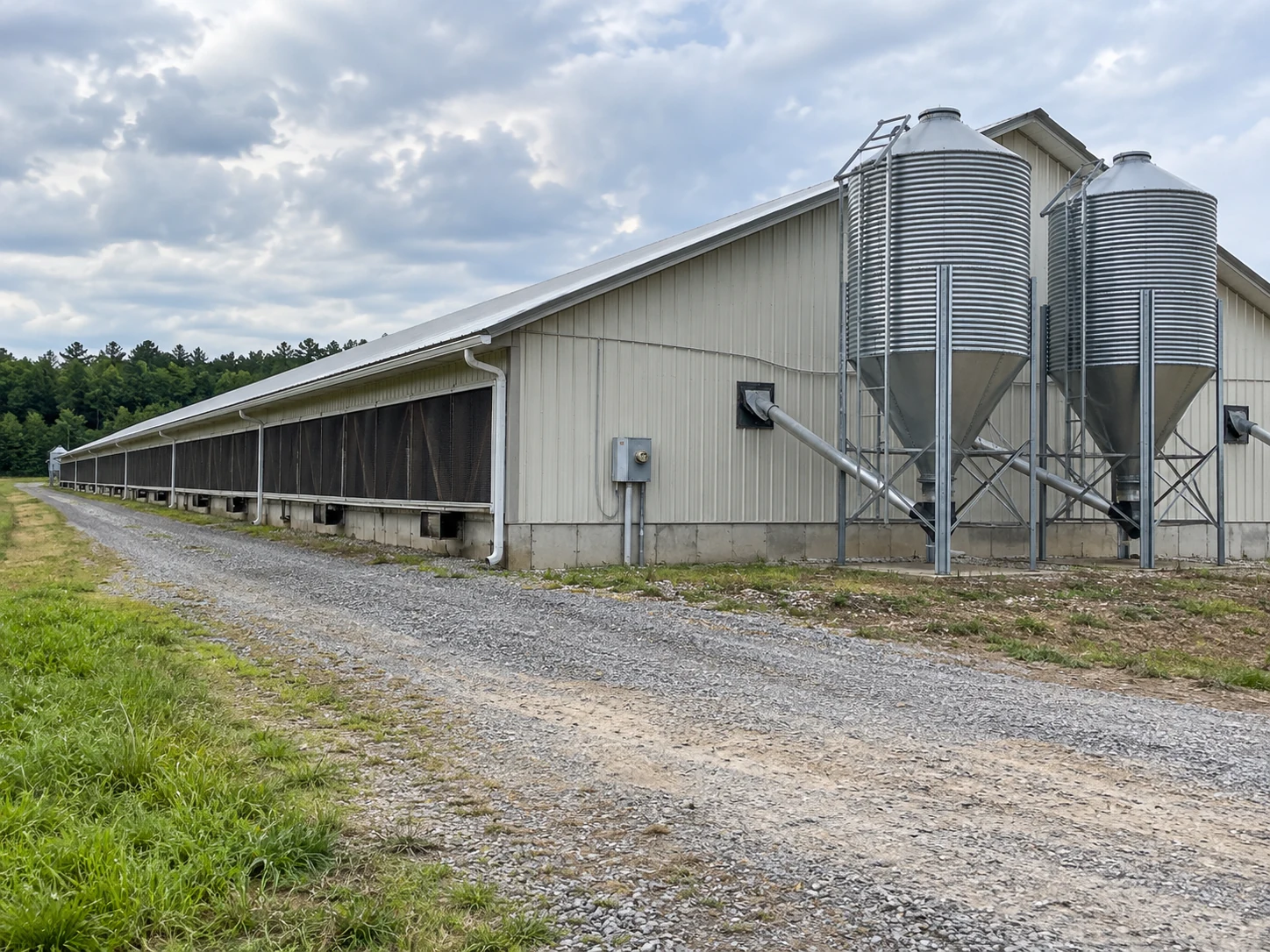
Drive past a chicken farm and the answer seems obvious: the farmer owns the farm, so the farmer must own the chickens. In much of U.S. broiler production, that is not how the business works.
A contract grower can own the land, the poultry houses, the equipment and the utility bills while a separate chicken company owns the birds. USDA calls this a production contract. The farmer is being paid to raise someone else’s chickens. [1, 4]
The farm and the flock can have different owners
USDA’s Agricultural Marketing Service defines a poultry contract grower as the person who provides housing, equipment, labor, litter, power and heat and cares for the birds during growout. The grower does not own the poultry; the grower receives a fee for raising them. [1]
This arrangement is not a small corner of the industry. In the 2022 Census of Agriculture, contract growers accounted for 73% of farms with broilers but 97% of broiler production. Independent growers and companies raising birds on their own farms made up the remainder. [2]
That creates a distinction consumers rarely see on a package: who owns the farm is not necessarily the same as who owns the animals.
Who provides what?
In a typical broiler production contract, the chicken company—often called the integrator—provides the chicks, feed, transportation, veterinary services and technical guidance. The farmer supplies the buildings, equipment, utilities and labor needed to raise the flock. [3]
The company may therefore make or heavily influence decisions that shoppers might assume belong entirely to the farmer: which chicks arrive, what feed is supplied, technical production expectations and when the flock is picked up for processing. The grower, meanwhile, is responsible for the day-to-day work of maintaining the houses and caring for the birds within the production system laid out by the contract. [1, 3]
Neither side is simply a landlord. The company owns valuable animals and supplies expensive inputs. The grower is responsible for the physical place where those animals live and for managing that environment every day.
Why would a farmer agree to that?
Production contracts can solve a real business problem. Instead of raising thousands of chickens and then searching for a buyer, a grower begins with a company already committed to supplying birds and receiving them for processing. USDA notes that agricultural contracts can help farmers manage income risk, secure a market for what they produce and support financing. [4]
The arrangement also shifts some major risks to the integrator. The company owns the birds and generally supplies feed and other important inputs. But the farmer takes on a different kind of risk: poultry houses and equipment can require substantial long-term investment, while the grower continues paying for labor, utilities, maintenance and other farm costs. [3, 5]
So “contract farming” does not mean the farmer has no business at stake. It means the risks and responsibilities are divided between two businesses.
How does the farmer get paid?
Many broiler contracts have historically used a ranking system often called a tournament. USDA’s 2020 survey describes growers being compared with other growers delivering birds to the same company around the same time. Performance measures can affect whether a grower receives more or less than a base payment. [3]
The resulting payments can vary considerably. That does not mean every company uses the same formula, and contract terms can change. Federal rules require poultry growing arrangements to explain how compensation is determined, how long the contract lasts and the conditions under which it can be ended. [5]
Since February 2024, additional federal transparency requirements for broiler contracts have also required certain disclosures, including the minimum number of flock placements per year and minimum stocking density for each flock. [6]
Can it still be a family farm?
Yes. “Family farm” and “contract farm” describe different things.
USDA’s 2022 poultry and egg snapshot reports that 97% of farms specializing in poultry and egg production were family farms. That statistic covers a broader group than broiler contract growers, so it should not be read as saying that 97% of contract broiler farms are family farms. But it shows why a family-owned farm and a highly coordinated corporate supply chain can exist at the same time. [2]
A family may own the acreage and poultry houses, do the daily work and carry farm debt while raising birds owned by a large poultry company.
Why this matters when you buy chicken
A picture of a farmer on a package can tell you something about who raised the bird, but it may tell you very little about who chose the genetics, supplied the feed, set production requirements or owned the chicken.
That does not automatically make contract production good or bad. It means “who is the farmer?” is only one transparency question.
If you want to understand how a chicken was actually raised, better questions include: Who owned the birds? Who supplied the feed? Who set the stocking and production requirements? What decisions could the farmer make independently? Who processed the chickens after they left the farm?
The surprising answer is that there may be two businesses behind one chicken: the farmer who owns and operates the farm, and the company that owns the flock and coordinates much of the production system. Knowing the difference gives consumers a clearer picture of where their food really comes from.
Sources and further reading
- Livestock, Poultry and Grain Poultry and Egg Terms. USDA Agricultural Marketing Service.
- 2022 Census of Agriculture: Poultry and Egg Production Highlights. USDA National Agricultural Statistics Service · 2024.
- Fees paid to growers for raising broiler chickens varied widely in 2020. USDA Economic Research Service · 2022.
- Farm Structure and Contracting. USDA Economic Research Service.
- Growers’ Rights in Poultry Growing Arrangements. USDA Agricultural Marketing Service.
- FAQ for Transparency in Poultry Grower Contracting and Tournaments Final Rule. USDA Agricultural Marketing Service · 2024.