Learn / Life on the Farm / Why Does Grass-Finished Beef Often Cost More?
Life on the Farm
Why Does Grass-Finished Beef Often Cost More?
A pasture is only part of the picture. Time, land, winter feed and processing all shape what beef costs.
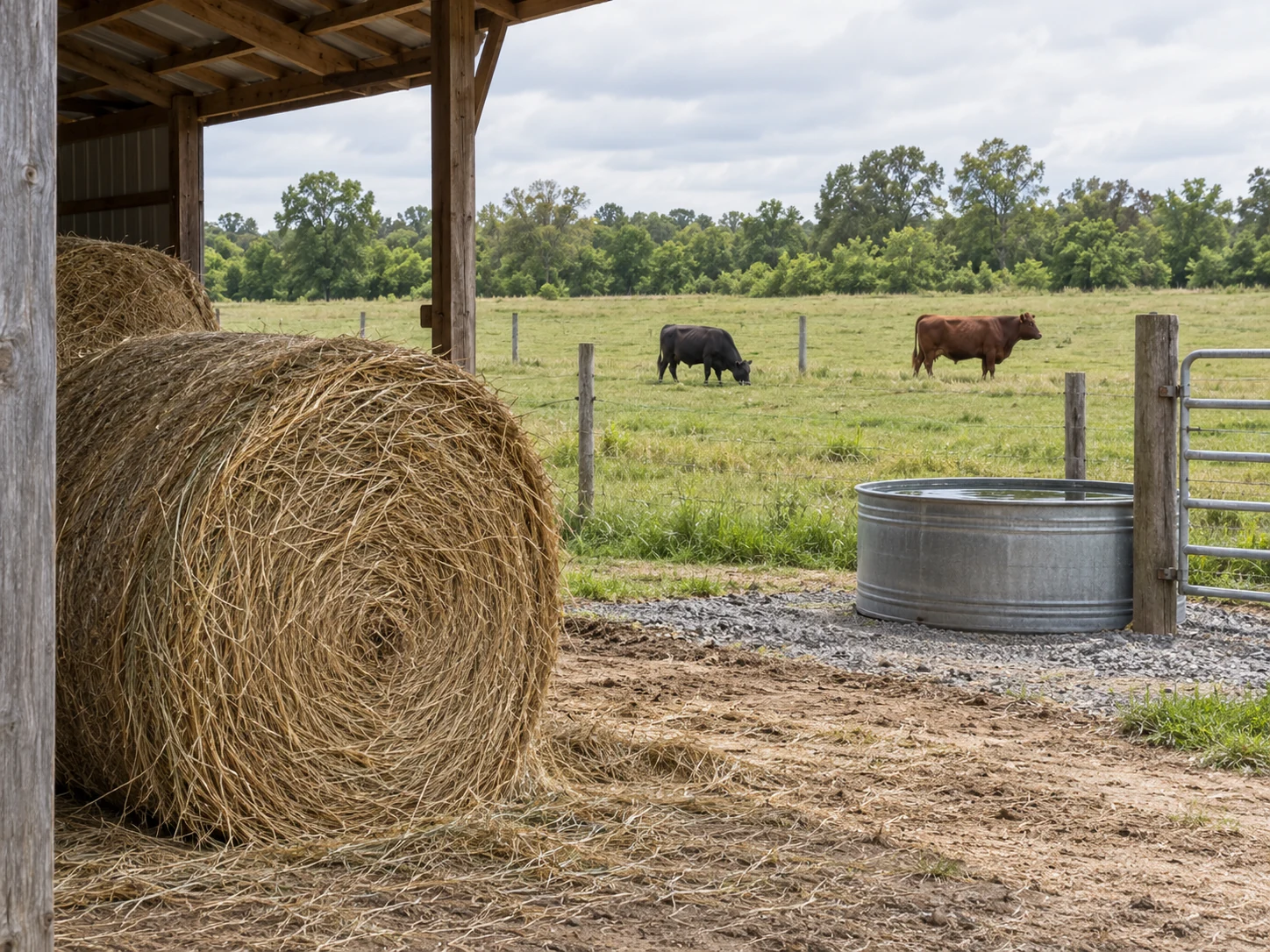
At the meat counter, a higher price can raise a fair question: if the cattle ate grass instead of purchased grain, why does the beef sometimes cost more?
The bill covers much more than feed. Land, time, meat yield, and the work of getting beef to customers all affect the price. [1, 3, 5]
First, what are we comparing?
Here, we are looking at cattle finished on grass and other forage rather than grain. Finishing is the final growth stage before slaughter, when the aim is to reach a suitable weight and level of fat—not simply keep an animal alive. [2]
And forage does not have to mean fresh grass every day. Hay and other stored forages can help feed cattle when grazing is unavailable. [1]
Grass grows. Good pasture takes work.
A field may look self-sufficient, but someone has to pay for the land, maintain fences and water systems, and manage the plants. A Penn State-led farm survey counted pasture maintenance, equipment, fencing, winter feed, and land among the costs of pasture-finished beef. [3]
The grass also has to provide enough nutrition. Penn State Extension explains that forage quality changes with plant maturity and how it is grazed or harvested. A tall field is not necessarily a field of high-quality feed. [1]
Practical Farmers of Iowa’s finishing guidance emphasizes matching cattle genetics, forage resources, and grazing management. Farmers have to watch both the animals and the pasture, including giving grazed areas time to recover. [2]
A longer growing period has a cost
Grain provides concentrated energy that can support faster weight gain during finishing. A forage-only system may need more time, particularly when the available forage cannot support the same growth rate. There is no single timetable that describes every farm. [1, 2]
That extra time can mean more days of feeding and care before the farmer receives payment. The Penn State project also identified keeping cattle too long before harvest as a problem for profitability on participating farms. [3]
In the Northeast, Penn State notes that year-round grazing is rarely possible, so stored forage fills the gap. Finishing through another winter can therefore bring another feeding bill—not a season of free grass. [1]
The number of pounds matters, too
A live animal’s weight is not the weight of the beef eventually sold. Dressing percentage describes the share of live weight remaining as a carcass after slaughter; that carcass still includes bone and fat, rather than only packaged cuts. [4, 5]
In a California study published in the Journal of Animal Science in 2022, researchers compared four feeding systems. The conventional grain-finished group had a higher final live weight and dressing percentage than either all-grass group. The all-grass systems also had higher calculated break-even costs per kilogram of carcass. The results apply to those systems, not all farms or current retail prices. [4]
The business implication is simple: when there are fewer saleable pounds to spread a given cost over, the cost per pound rises.
Some costs happen after the farm
Even after an animal is ready, there are bills for slaughter, cutting, transportation, and selling the beef. The Pasture Project’s grass-fed beef calculator treats those as separate costs, including a per-animal slaughter fee and per-pound processing charges. [5]
For a farmer selling directly, eliminating a middleman does not eliminate those jobs. Processing still has to be arranged, the beef has to reach customers, and sales take time. The farmer may be doing more of that work personally. [3, 5]
These costs are not unique to grass-finished beef. The scale and organization of the business also matter; “grass-finished” does not describe the size of the farm or its supply chain. [5, 6]
Could the premium become smaller?
Yes—at least in some systems. Cornell’s account of a 2026 study describes an analysis using survey data from 31 farms and production facilities in New York and New England. Its expanded-operation scenario modeled a 24% reduction in production costs compared with smaller-scale operations. The researchers also suggested cooperation among farms as a route to scale. [6]
That is a regional model, not a promised discount on your next purchase. But it offers a useful counterpoint: making grass-finished beef more affordable does not necessarily mean changing what the cattle eat. Coordination and how the supply chain operates matter, too. [6]
What are you paying for?
A higher price can reflect real production and handling costs. It is not, by itself, proof of better care, better flavor, or a healthier product.
When comparing options, start with the same cut and price per pound. Then look for a clear explanation of the feeding program, farm practices, and any additional services included in the price.
You do not have to buy the most expensive beef to make a thoughtful choice. The useful question is whether the producer explains what makes the product different—and whether those differences matter to you.
Sources and further reading
- Grass-fed Beef Production. Penn State Extension · 2024.
- Finishing Cattle on Grass: Lessons Learned from PFI. Meghan Filbert · Practical Farmers of Iowa · 2019.
- Adoption of grass-fed beef management practices — Final Report, LNE06-236. John W. Comerford, project leader · SARE.
- Grass-fed vs. grain-fed beef systems: performance, economic, and environmental trade-offs. Sarah C. Klopatek and colleagues · Journal of Animal Science · 2022.
- Grass Fed Beef Production: Counting the Costs. Allen Williams · Pasture Project.
- Northeast farmers could profit from grass-fed beef if they expand, join forces. Caitlin Hayes · Cornell Chronicle · 2026.