Learn / Food & Nutrition / Why Are Some Egg Yolks Orange and Others Yellow?
Food & Nutrition
Why Are Some Egg Yolks Orange and Others Yellow?
Yolk color can reflect what a hen eats. It cannot, by itself, tell you how she lived or how nutritious the egg is overall.
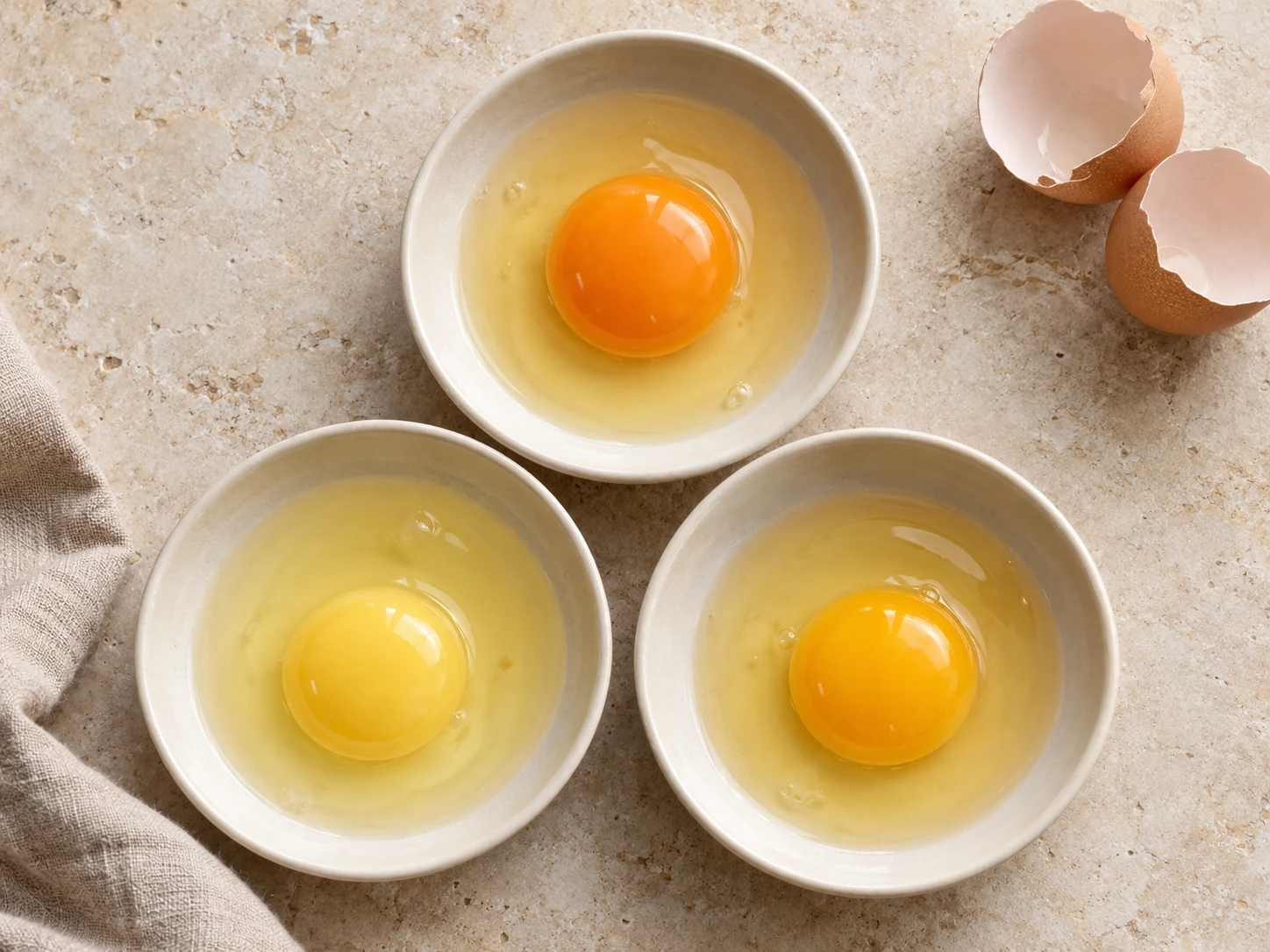
Crack two eggs into a bowl. One yolk is pale yellow. The other is a deep orange. Before you have cooked either one, the orange yolk might already look like the better egg.
But what are you actually seeing? Mostly, the effect of pigments in the hen’s diet. Yellow corn and marigold petals, for example, can deepen yolk color. The color is a clue about feeding, not a complete report on the egg or the farm. [1]
The color starts in the feed
Many of the pigments involved are carotenoids, including lutein and zeaxanthin. Hens obtain these compounds from what they eat, and some are deposited in the developing yolk. Different pigments and different amounts can produce different shades. [2, 4]
That is why feed ingredients matter. USDA’s explanation contrasts diets containing yellow-orange plant pigments with a diet based on white cornmeal, which produces a paler result. Research has also tested marigold and paprika extracts as ways to change yolk pigmentation through feed. [1, 2]
This is not a dye being injected into the finished egg. In those feeding experiments, the change happened through what the hens ate before the eggs were laid. [2]
A revealing experiment: change the corn
In a study published in Poultry Science in 2021, researchers fed 360 laying hens diets containing white, yellow, or carotenoid-rich orange corn for 31 days. The hens were kept in the same type of cage housing, and the researchers reported that corn type was the only difference between the diets. [3]
The orange-corn group produced more deeply colored yolks with higher concentrations of the pigments measured. The birds did not need to move onto pasture for that change to happen. [3]
The practical lesson is straightforward: a deeper yolk color cannot, by itself, prove outdoor access. This study demonstrates a feeding effect, not a reason to dismiss pasture-based farming. Some authors were affiliated with the orange-corn company NutraMaize, an important detail when weighing the research. [3]
Does orange mean more nutritious?
It can mean more of particular pigments. That is more specific than saying “more nutritious” overall.
A separate 2021 experiment involving 270 laying hens found that adding lutein to their diet increased yolk lutein content and deepened color. The researchers also examined cooked eggs, rather than only raw yolks. [4]
Some authors were affiliated with companies supplying the lutein preparations. [4]
So it would be misleading to claim that color has nothing to do with composition. Under a particular feeding program, the two can change together. But that experiment was not a test of whether people became healthier by choosing orange-yolk eggs. Nor did it establish a universal color chart for judging an egg’s protein, vitamin D, or omega-3 content. [4]
For a specific nutrient claim, look for an amount per egg or serving and evidence behind that amount. A photograph of an orange yolk is not a nutrition label.
Color and living conditions are different questions
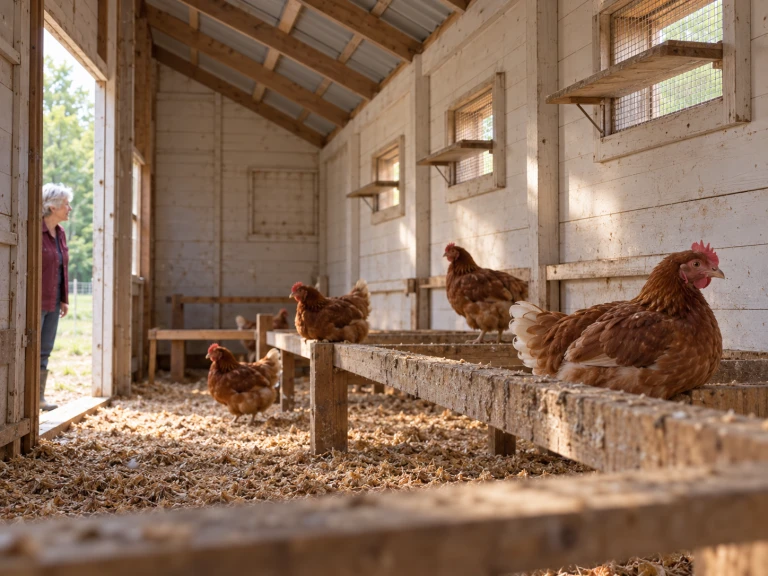
USDA’s shell-egg guidance describes cage-free and free-range claims in terms of the hens’ housing and access, not their yolk shade. For eggs in USDA-grademarked packages, those descriptions address matters such as movement, nests, perches, and outdoor access. [5]
That is the distinction to keep when shopping. Feed information helps explain what went into the diet. A housing standard helps explain how the hen lived. One should not stand in for the other.
Choosing pasture-raised eggs because you value the farming approach is different from choosing them because you expect every yolk to match a particular orange. Ask for the farm’s written practices or the requirements behind its certification—not just its most attractive egg photograph.
Is a darker yolk fresher—or safer?
Freshness involves changes beyond color. As an egg ages, its white becomes more watery and its yolk tends to flatten as the surrounding membrane weakens. These are changes in structure, not a yellow-to-orange freshness scale. [1, 5]
And appearance cannot guarantee safety. FDA notes that even fresh eggs with clean, uncracked shells can contain Salmonella. Keep eggs refrigerated at 40°F or below, cook until the yolk and white are firm, and use pasteurized eggs or egg products for recipes served raw or undercooked. [6]
Enjoy the color. Look beyond it.
There is nothing wrong with preferring a rich orange yolk. It can be part of what you enjoy about breakfast.
Just match the evidence to the reason you are buying. For nutrition, look for measured nutrient information. For animal care, look for documented farming practices. For freshness and safety, pay attention to storage and handling. Those are separate decisions, even when they all start with the same carton. [5, 6]
An orange yolk can be lovely to look at. It should not have to tell the whole story.
Sources and further reading
- Shell Eggs from Farm to Table — USDA Food Safety and Inspection Service · 2011. Pages 7–8; USDA publication hosted by FARAD.
- Effect of Dietary Carotenoid on Egg Yolk Color and Singlet Oxygen Quenching Activity of Laying Hens — Kojima, S., and colleagues · The Journal of Poultry Science · 2022.
- Biofortified orange corn increases xanthophyll density and yolk pigmentation in egg yolks from laying hens — Ortiz, D., and colleagues · Poultry Science · 2021.
- Dietary Supplementation with Microencapsulated Lutein Improves Yolk Color and Lutein Content in Fresh and Cooked Eggs of Laying Hens — Wen, C., and colleagues · The Journal of Poultry Science · 2021.
- Questions and Answers – USDA Shell Egg Grading Service — USDA Agricultural Marketing Service · 2015.
- What You Need to Know About Egg Safety — U.S. Food and Drug Administration.