Learn / Life on the Farm / Are Livestock Feed By-Products Really Garbage?
Life on the Farm
Are Livestock Feed By-Products Really Garbage?
An ingredient left from making food can still feed an animal. Its value depends on the ingredient, the animal and how it is handled.
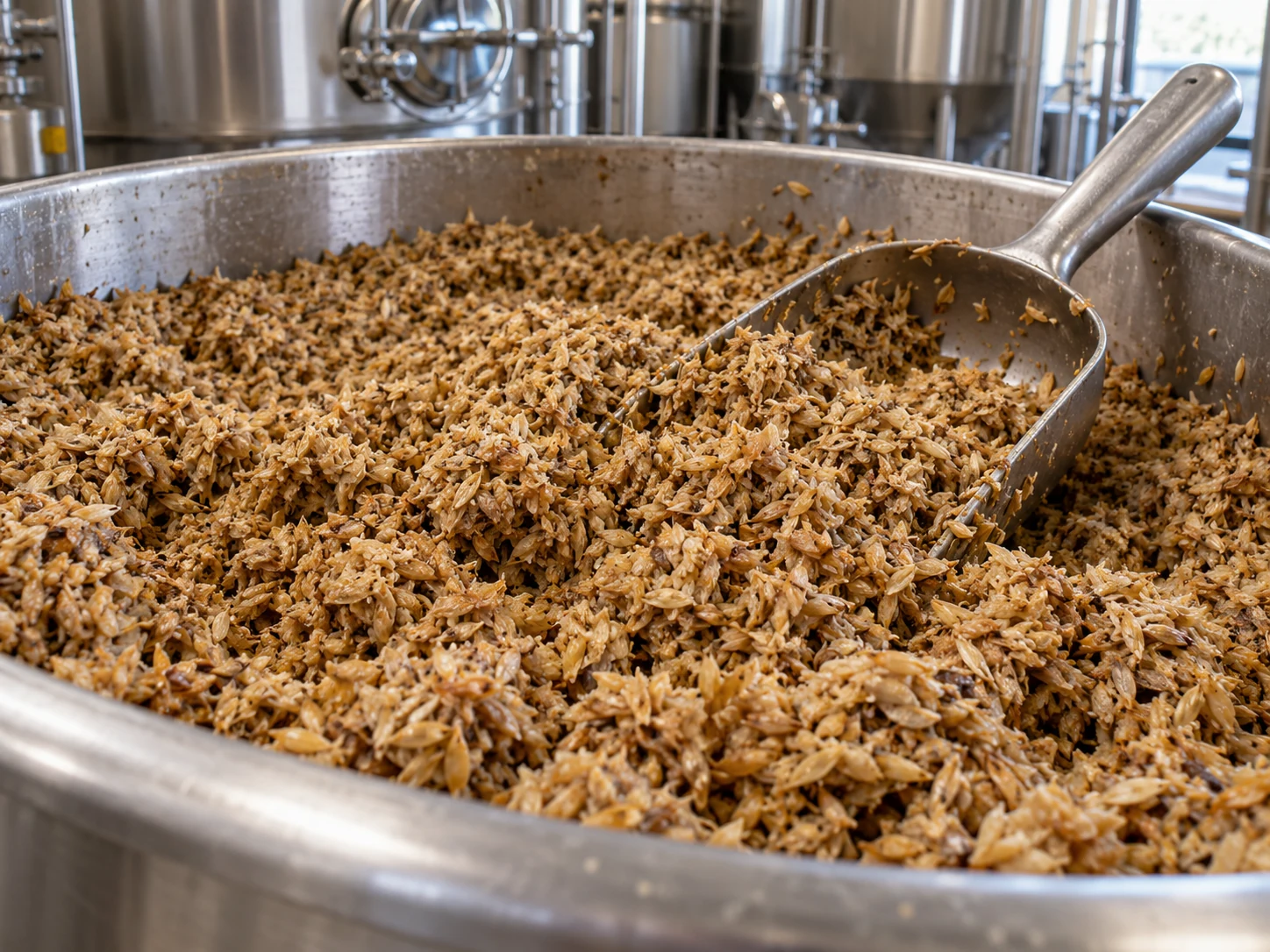
Read a livestock ration and you might see ingredients such as brewers grains, beet pulp, soybean hulls, corn gluten feed or distillers grains. To a shopper, some of those names can sound like leftovers that should have gone in the trash.
In animal nutrition, however, a by-product is not automatically garbage. It usually means a secondary material left after another product has been made. Some of those materials still contain useful protein, energy, fiber or minerals. The more important questions are what the ingredient is, which animal is eating it, how much is being fed and how safely it is handled. [1, 2]
What does “by-product” actually mean?
Penn State Extension defines by-product feeds as secondary materials generated while manufacturing a principal product, often for human consumption. FDA uses examples such as wet spent grains from brewing, fruit and vegetable peels, and liquid whey from food processing. [1, 2]
That does not mean the material has no nutritional value. Brewing removes portions of a grain that are useful for making beer, but the remaining wet grains still contain protein and fiber. Processing sugar beets leaves beet pulp, which can be a useful source of digestible fiber. Ethanol production removes much of the starch from corn and leaves distillers grains containing concentrated protein, fiber, fat and minerals. [1, 3]
The word describes where an ingredient came from. It does not, by itself, tell you whether the ingredient is nutritious, appropriate or safe.
Why would a farmer feed it?
A balanced ration has to supply the nutrients an animal needs. A by-product may fill one of those nutritional jobs at a competitive cost. Penn State notes that different by-products can provide energy, protein, fiber or fat, depending on how the original food was processed. [1]
Oklahoma State University lists dozens of by-product feeds used in cattle diets, from brewers grains and beet pulp to soybean hulls and wheat middlings. Their nutrient profiles are very different. Some are energy-dense; others are fibrous; some contribute substantial protein. That is why “contains by-products” is not a meaningful nutritional judgment without knowing the actual ingredients and the complete ration. [3]
Local availability matters too. A brewery, sugar processor, flour mill or ethanol plant can produce a large stream of material that might otherwise have fewer uses. Feeding an appropriate co-product or by-product can recover nutrients from that stream while reducing the amount of more expensive feed a farm has to purchase. Wet products, however, can be expensive to transport and can spoil if they are not stored and managed correctly. [1, 3]
Cattle can use some foods humans cannot
Ruminants such as cattle have another advantage: microorganisms in the rumen ferment fibrous carbohydrates that people cannot digest efficiently. That microbial fermentation produces compounds the animal can use for energy and helps cattle obtain nutrition from forages and fibrous feed ingredients. [4]
This is one reason cattle can make useful food from materials such as soybean hulls, beet pulp and other fibrous ingredients that are not normally part of the human diet. It does not mean every by-product is appropriate for cattle, or that cattle should be fed whatever is available. The ration still has to provide effective fiber, adequate protein, minerals, vitamins and the right amount of energy. [3, 4]
“By-product” does not mean “anything goes”
Feed ingredients can vary considerably from one load to another. Oklahoma State warns that variation among by-products can be substantial and recommends testing feeds for nutrient composition rather than relying only on average book values. Wet feeds can also vary greatly in moisture, which changes how much actual nutrient an animal receives per pound of material. [3]
There are safety concerns as well. FDA monitors biological, chemical and physical hazards in animal food, including bacteria, mycotoxins and other contaminants. Covered animal-food facilities are subject to current good manufacturing practices, and many must evaluate hazards and use preventive controls under the Food Safety Modernization Act. Human-food processors supplying by-products for animal food have specific handling requirements intended to prevent contamination. [2, 5]
Federal rules also prohibit certain animal-derived materials from particular feeds. FDA restricts certain mammalian proteins in ruminant feed and prohibits specified high-risk cattle materials in feed for all animal species to reduce the risk of bovine spongiform encephalopathy, or BSE. So the idea that livestock feed is simply an unregulated destination for unwanted material is inaccurate. [6]
The species matters
A feed that works well for cattle may be a poor choice for chickens or pigs. Ruminants rely heavily on microbial fermentation in the rumen. Poultry and swine are nonruminants and have different digestive systems and more specific requirements for digestible amino acids and other nutrients. [4, 7]
Even within one species, the appropriate ration changes with age, growth, pregnancy, lactation and production goals. A useful feed ingredient becomes useful only when it is part of a ration designed for the animal eating it.
A better question for consumers
If a farm says it uses by-product feeds, asking “Are you feeding waste?” will not tell you very much. Better questions are: What are the ingredients? Why are they included? What nutrients do they provide? Is the ration tested or formulated by someone qualified? How are wet ingredients stored? And what portion of the animal’s diet is forage, grain or other feed?
Some feed by-products are genuinely useful ingredients. Others may be unsuitable, inconsistent or poorly handled. The name alone does not decide which is which.
The useful distinction is not “whole food” versus “garbage.” It is whether each ingredient is safe, nutritionally appropriate for that species and used as part of a balanced feeding program.
Sources and further reading
- Concentrates for Dairy Cattle. Virginia A. Ishler and Carly Becker · Penn State Extension · 2023.
- FSMA Final Rule for Preventive Controls for Animal Food. U.S. Food and Drug Administration.
- Nutritive Value of Feeds. Oklahoma State University Extension.
- From Feed to Milk: Understanding Rumen Function. Penn State Extension · 2016.
- Biological, Chemical, and Physical Contaminants in Animal Food. U.S. Food and Drug Administration.
- How Do I Start an Animal Food Business?. U.S. Food and Drug Administration.
- Nutrient Requirements of Beef Cattle. Oklahoma State University Extension.