• What Happens When an Organic Animal Gets Sick?

    Learn / Understanding Labels / What Happens When an Organic Animal Gets Sick?

    Understanding Labels

    What Happens When an Organic Animal Gets Sick?

    Necessary treatment comes first. Organic rules also determine what happens to the animal’s labeling status afterward.
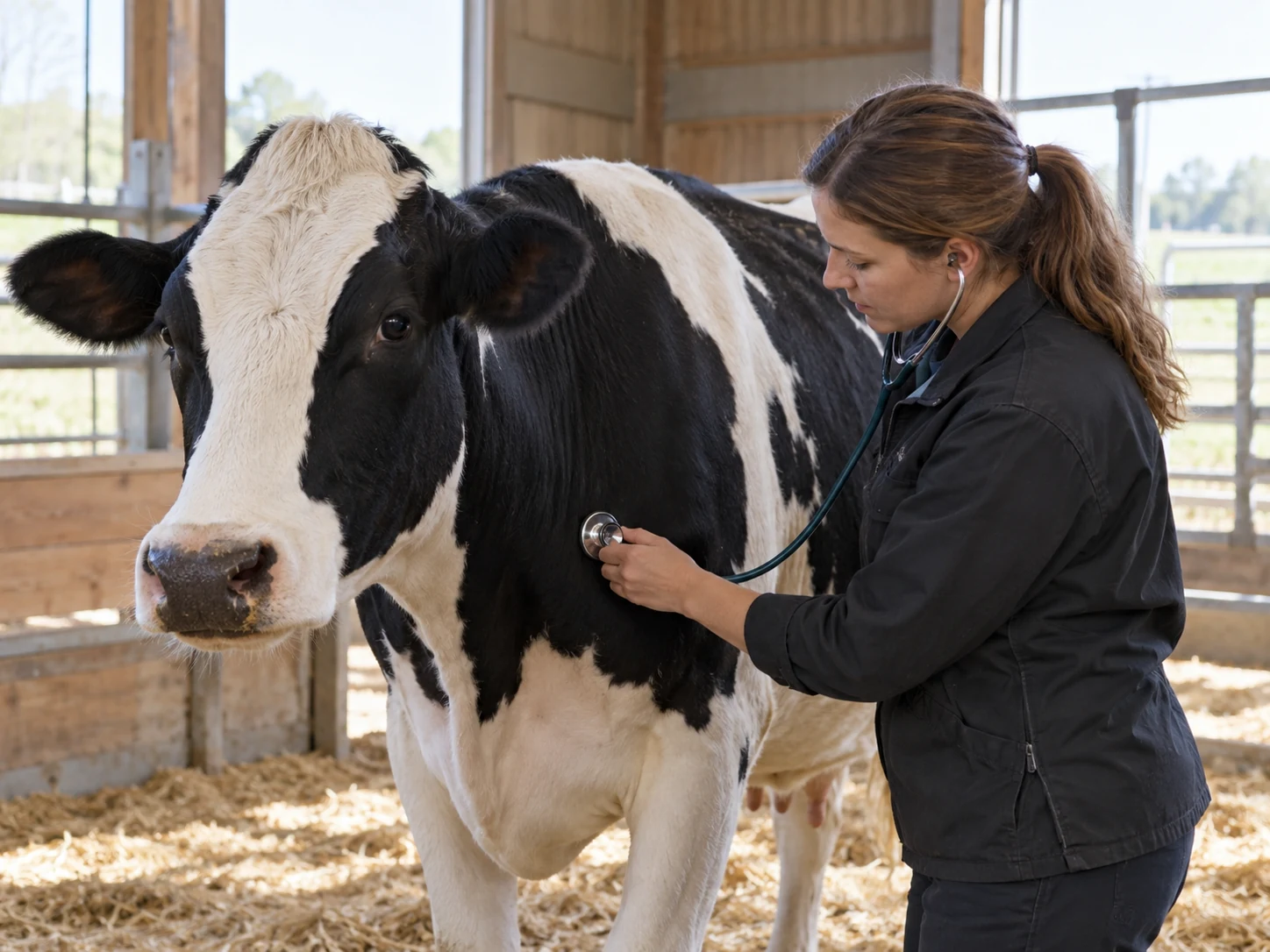
    Illustration of a veterinarian examining a dairy cow with a stethoscope in a barn.
    AI-generated illustration of veterinary care; not a Simply Pasture partner farm or evidence of organic certification.

    An organic animal that gets sick must receive appropriate care. U.S. organic standards specifically prohibit withholding necessary medical treatment just to preserve organic status. If an antibiotic or another prohibited substance is needed, the animal must be treated, even though the animal and its products can no longer be sold as organic. [1, 2]

    That distinction matters when shopping for milk, eggs, or meat. The organic label describes a regulated production system. It does not mean an animal never needed medical attention or that a farmer was allowed to leave it untreated. [2, 5]

    Care starts before an animal gets sick

    Organic livestock rules emphasize prevention: suitable animals, adequate nutrition, appropriate housing and sanitation, exercise, and conditions that reduce stress. Vaccines are part of the standards, too. Farmers must also monitor lameness and provide timely treatment. These are management requirements, not a promise that illness will never occur. [1]

    When illness or injury does occur, treatment depends on the problem and the medicines permitted for that use. Organic production allows some medical treatments, including certain pain medicines, electrolytes without antibiotics, and treatments for conditions such as milk fever. The National List sets restrictions; a medicine being allowed for one purpose does not make every use acceptable. [3]

    Necessary treatment comes first

    If methods acceptable for organic production fail, the regulations require appropriate medications to restore the animal to health. Producers also may not withhold individual treatment needed to minimize pain and suffering. USDA explains that animals must be treated when recovery is possible, even if that treatment causes loss of organic status. [1, 2]

    The rules do not require keeping an animal alive at any cost. Operations must have a written plan for prompt, humane euthanasia when an animal suffers from irreversible disease or injury. Treatment and humane end-of-life care both belong in an animal-care system. [2]

    Antibiotics change organic eligibility

    An antibiotic-treated animal cannot be marketed as organic, and neither can its subsequent products. For a meat animal, that means its meat loses organic eligibility. For a laying hen, its subsequent eggs cannot be sold as organic. For a dairy cow, subsequent milk cannot be sold as organic. Recovery or the end of a drug withdrawal period does not restore that eligibility. [1, 2]

    Farmers must identify animals treated with prohibited substances and record treatments. That allows the farm to keep affected animals and products out of its organic sales. [1]

    The livestock category matters

    Meat animals generally need continuous organic management from the last third of gestation. Poultry used for organic meat or eggs must be managed organically beginning no later than the second day of life. These requirements cannot be restarted simply by returning a treated animal to organic feed. [4]

    Dairy has a limited exception for eligible farms making a one-time transition into organic production. Those animals need at least 12 months of continuous organic management before their milk qualifies. This is not a recurring route for an established organic dairy to return antibiotic-treated cows to organic milk production. Also, a cow qualifying through that dairy transition does not thereby qualify for organic meat. [4]

    Breeding animals have another distinction: a nonorganic mother can produce an organically eligible offspring if the applicable conditions are met, including organic management throughout the last third of gestation and the nursing period. Treatment history and timing therefore matter. A mother’s loss of eligibility for her own products does not automatically disqualify every future offspring. [4]

    Allowed medicines can have temporary restrictions

    Using an allowed medicine under its permitted conditions can have a different result from using an antibiotic. Some allowed medicines carry withdrawal periods during which milk cannot be sold as organic. That temporary restriction should not be confused with the loss of eligibility caused by a prohibited treatment. Milk from animals undergoing prohibited treatment also cannot be fed to organic livestock. [2]

    Parasite medicines illustrate why broad statements can mislead. Certain listed synthetic dewormers are permitted under specified conditions for dairy animals, breeding animals, and fiber-bearing animals. They are prohibited for slaughter stock, and routine use of synthetic parasiticides is prohibited. Restrictions include treatment timing and species-specific milk withdrawal periods; fiber animals have a separate interval before wool or fleece harvest. These exceptions do not permit antibiotics in organic production. [3]

    A withdrawal period answers a different question

    Drug withdrawal periods govern when meat, milk, or eggs from treated animals can enter the food supply under applicable drug and residue rules. FDA explains that these intervals allow residues to fall to legal levels. Depending on the animal and treatment, products may enter conventional markets once all applicable requirements are met. [6]

    That food-safety interval does not erase the animal’s treatment history for organic labeling. A product can meet conventional food requirements and still be ineligible for the organic label. [1, 6]

    What consumers can ask

    When buying directly from a farm, useful questions include: How do you recognize and treat sick animals? What happens when an animal needs antibiotics? How do you track treated animals and their products?

    A clear answer should explain both the care provided and the labeling consequence. Organic standards require treatment while placing limits on what can be sold as organic. The label alone does not establish that every animal remained healthy or prove superior welfare outcomes on every farm. [2, 5]

    Sources and further reading

    1. 7 CFR § 205.238 — Livestock care and production practices standard. USDA, National Organic Program · eCFR.
    2. National Organic Program; Organic Livestock and Poultry Standards — Final rule. USDA Agricultural Marketing Service · Federal Register · 2023.
    3. 7 CFR § 205.603 — Synthetic substances allowed for use in organic livestock production. USDA, National Organic Program · Cornell Law School, Legal Information Institute.
    4. 7 CFR § 205.236 — Origin of livestock. USDA, National Organic Program · eCFR.
    5. Organic Standards. USDA Agricultural Marketing Service.
    6. Adequate Records Help Prevent Illegal Drug Residues and Ensure Food Safety. U.S. Food and Drug Administration.
  • Cage-Free, Free-Range and Pasture-Raised Eggs

    Learn / Understanding Labels / Cage-Free, Free-Range and Pasture-Raised Eggs

    Understanding Labels

    Cage-Free, Free-Range and Pasture-Raised Eggs

    Three carton terms to investigate—and the everyday details that help explain them.

    The short version

    Read a housing claim together with its named standard, rather than treating the words as a complete care score.

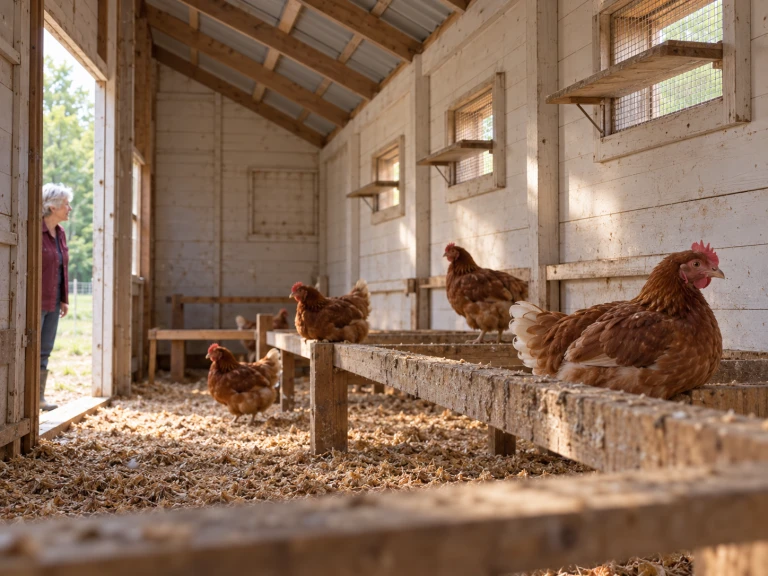
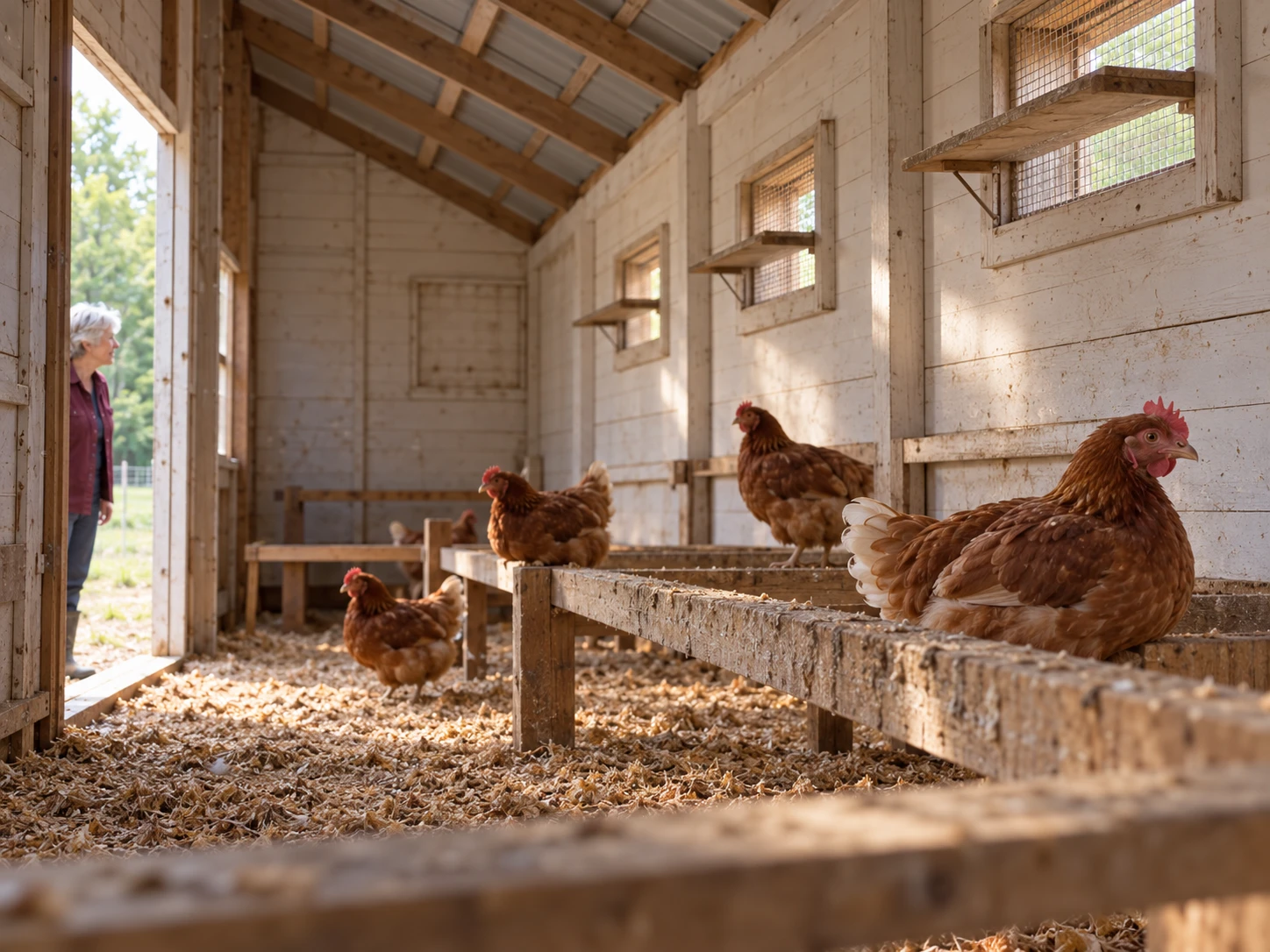
    Brown hens on wooden perches inside a hen house, with a farmer at the open doorway.
    Illustrative scene; not an identified Simply Pasture partner farm.

    The egg aisle is full of short phrases. It is easy to read them as a simple ranking and still leave without knowing much about the hens. A better starting point is to separate the housing question from the details of everyday care.

    Ask what each term covers

    At a basic descriptive level, cage-free concerns freedom from cages; free-range points to outdoor access; pasture-raised points to time on vegetated land. Those brief descriptions are only a starting point. To understand a particular carton, find the requirements attached to its claim.

    One example makes the distinction more concrete. Humane Farm Animal Care’s Edition 21 standard specifies at least 2 square feet of outdoor space per hen for its free-range system, and at least 2.5 acres per 1,000 hens for its pasture-raised system. The pasture requirements also include vegetation and a written rotation plan. Access conditions, shelter and other care requirements matter alongside space.

    These are requirements of that particular certification program, not a universal rule for every carton using those terms. Simply Pasture is not claiming this certification. Read the laying-hen standards.

    A useful way to compare

    TermStart hereAsk next
    Cage-freeHens are not kept in cages; this can be an indoor system.Is outdoor access described separately?
    Free-rangeLook at the outdoor-access requirements.What space and ground conditions are specified?
    Pasture-raisedLook at the vegetated outdoor area and how it is managed.What does the named standard require through the seasons?

    Then look for information about shelter at night and who checks the claim. This gives you something useful to compare even when two cartons use similar photographs. Save the standard’s link if you want to read it at home.

    Know what the USDA shield tells you

    USDA’s grading shield identifies officially graded eggs meeting the designated quality standard. In that voluntary program, cartons receive label review and cage-free sourcing includes verification and segregation procedures. Quality grading and a complete animal-care story are different pieces of information. Learn about USDA’s graded-shell-egg program.

    Look inside the farm story

    We think an informative story should include ordinary details: the doorway hens use, the place they drink and the house where they settle. These details help a shopper picture daily care without turning the farm into a postcard.

    Our example egg-farm profile explores that approach. It is an illustrative concept, not a confirmed supplier or evidence of an operating verification program. Simply Pasture’s own standards remain in development.

    Open the example egg-farm story →

    Sources

  • What Pasture-Raised Really Means

    Learn / Understanding Labels / What Pasture-Raised Really Means

    Understanding Labels

    What Pasture-Raised Really Means

    Go beyond the field on the carton: ask about outdoor conditions, daily care and the standard behind the words.

    The short version

    Look for the details behind the claim: the space, the care and the written requirements.

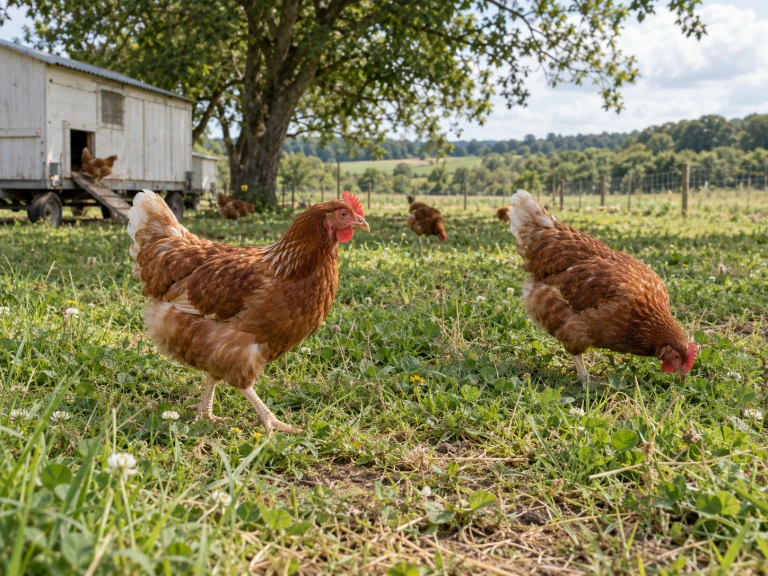
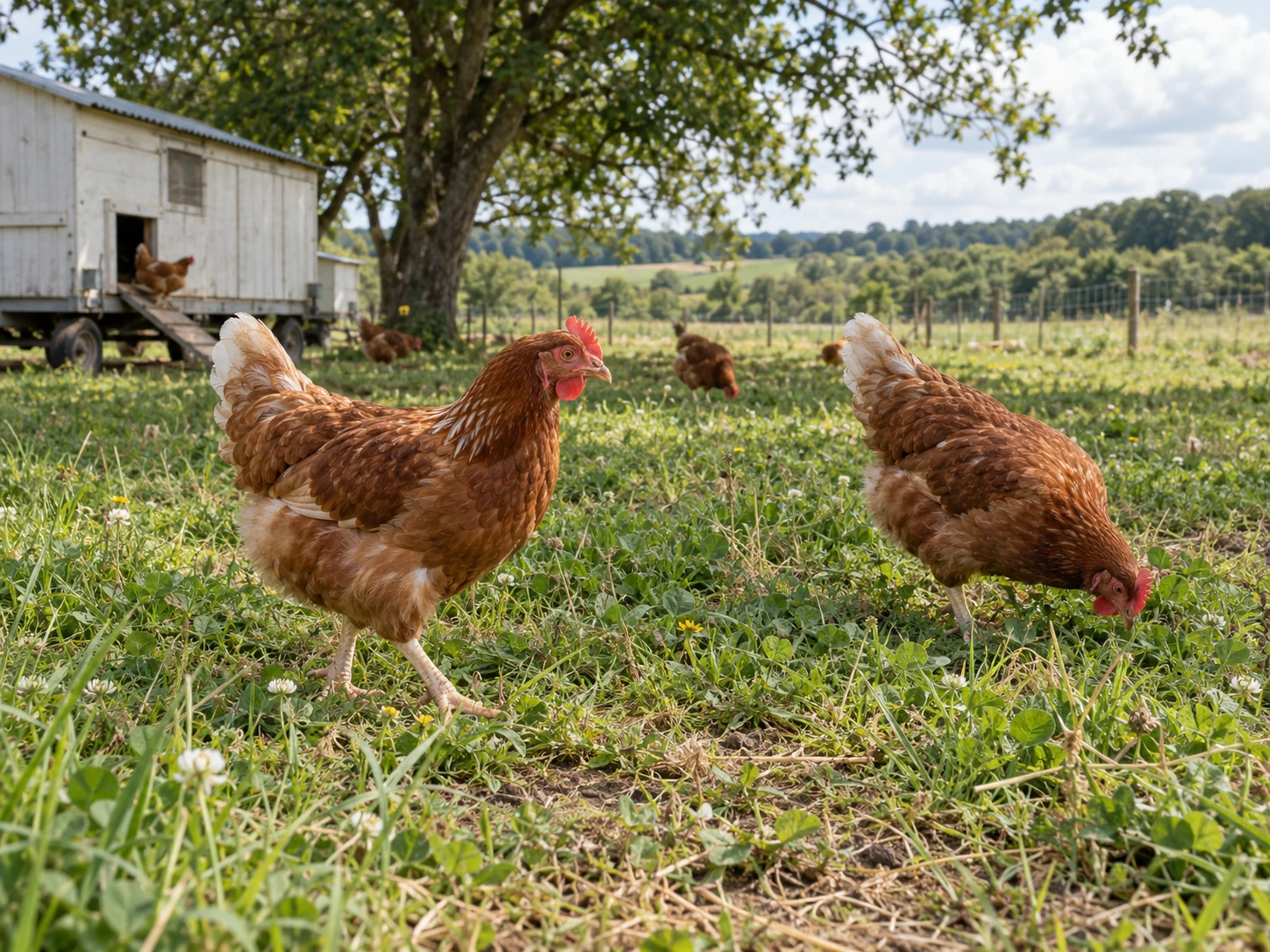
    Brown hens foraging among grass and clover, with a mobile hen house in the background.
    Illustrative scene; not an identified Simply Pasture partner farm.

    Pasture-raised describes an animal’s life on vegetated land. It does not, by itself, mean an all-grass diet. The details depend on the species and the written standard behind the claim.

    To understand a particular product, look for a description of the outdoor area, shelter, feeding and daily care. A pasture photograph cannot tell that whole story.

    The wording needs a framework

    For meat and poultry pasture claims, USDA FSIS’s 2024 guidance encourages documentation that animals spent most of their lives on pasture, with the land mainly covered by rooted vegetation. That guidance concerns meat and poultry labeling; it should not be applied as a blanket rule for shell eggs or dairy. See the guidance.

    Four questions worth asking

    • What is the outdoor space like, and how is its condition maintained?
    • What indoor shelter, shade and water are available?
    • What does the animal eat, including feed provided alongside pasture?
    • Which written standard applies, and how is compliance checked?

    You do not need an answer packed with technical terms. A plain description, a named standard and a way to ask a follow-up question are a good place to start. Look for information that describes a typical day and difficult conditions, not just the best-looking season.

    Care includes what happens indoors

    For an example of how detailed requirements can work, Humane Farm Animal Care publishes species-specific standards covering feed, water, housing and management. Its laying-hen document includes provisions for both the house and outdoor systems. Those are that certification program’s requirements; Simply Pasture is not claiming that certification. Explore the published standards.

    For us, that raises a useful editorial test: does a farm story show enough of daily life to help someone understand the care? We would want to see the practical spaces as well as the pasture: where animals drink, where they rest, and how someone checks on them.

    The connection we are building

    Simply Pasture is developing a framework around animal care, feed, farm identity and supporting information. Our example farm profiles show how that information could be presented. They are concept demonstrations, not profiles of confirmed suppliers.

    Explore them with those four questions in mind. The purpose is to make better questions easier to ask and clearer answers easier to find.

    Explore example farm stories →

    Sources

  • Grass-Fed vs. Grass-Finished: What the Label Actually Tells You

    Learn / Understanding Labels / Grass-Fed vs. Grass-Finished: What the Label Actually Tells You

    Understanding Labels

    Grass-Fed vs. Grass-Finished: What the Label Actually Tells You

    Two familiar terms, one important distinction: read the whole feeding claim, including the finishing stage.

    The short version

    For U.S. beef labels, an unqualified grass-fed claim covers forage feeding after weaning. Grass-finished alone does not establish the earlier diet. Read the complete claim.

    A brown cow grazing in a pasture, with other cattle behind it.
    Illustrative scene; not an identified Simply Pasture partner farm.

    A beef label can fit several farming words into a very small space. To make sense of them, start with one question: what does the claim say about the animal’s diet across its life?

    Start with the current U.S. guidance

    In its August 2024 guidance, USDA FSIS treats unqualified “grass-fed” and “100% grass-fed” claims as equivalent for cattle meat labels: forage feeding after weaning, with no grain feeding. Milk before weaning is an exception. Forage can include preserved feeds such as hay; it does not mean fresh grass every day. Read the FSIS guidance.

    “Grass-finished” describes the finishing stage and does not, by itself, establish the earlier diet. FSIS gives grain feeding followed by grass finishing as an example that needs clear qualification. This is why the complete wording matters more than choosing one appealing word.

    Read the sentence around the claim

    When comparing two packages, slow down at the asterisk. Does a nearby explanation describe the whole feeding program, or a particular period? Is the explanation easy to find? Can you follow it to a written standard?

    We would look for three things: a clearly stated diet, a clear account of the finishing stage, and an identifiable source for the standard. Keep a screenshot or bookmark if you want to compare brands later. That is more useful than trying to remember a row of similar-looking seals in the store.

    Keep feed and care in the same conversation

    Our view is that a useful food story should also invite questions about the animal’s surroundings and everyday care. Where could it rest? How were changing conditions handled? Who was responsible for checking on it?

    Ask those questions alongside the feed question. A short description of what an animal ate should not be asked to do the work of an entire farm profile. We want shoppers to be able to explore both subjects without needing to become label specialists.

    Where Simply Pasture stands

    Our concept assortment includes the intended claim “100% Grass-Fed & Grass-Finished.” Simply Pasture’s standards and verification process are still in development. This article explains label language; it is not evidence of operating supplier checks or a certification.

    As the program develops, our aim is to connect understandable claims to understandable requirements. You should be able to see what a term covers, who checks it and which product it applies to.

    Explore the label guide →

    Sources