• Why Do Farmers Move Cattle From Pasture to Pasture?

    Learn / Life on the Farm / Why Do Farmers Move Cattle From Pasture to Pasture?

    Life on the Farm

    Why Do Farmers Move Cattle From Pasture to Pasture?

    Moving the herd gives a farmer control over grazing. What matters just as much is what happens after the cattle leave.
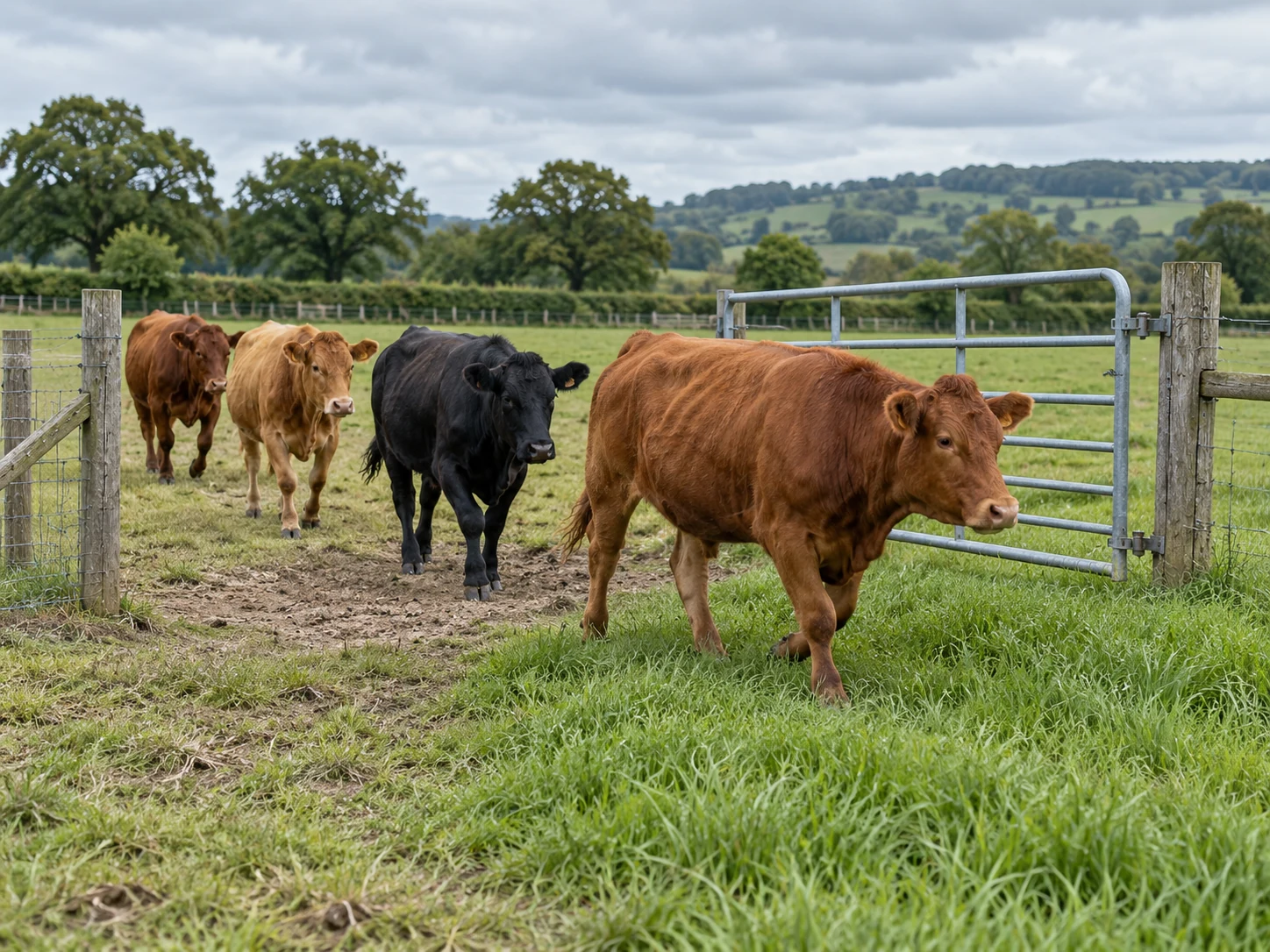
    Illustrative scene of beef cattle walking through an open gate between two pasture paddocks.
    AI-generated illustration of a paddock move; not a Simply Pasture partner farm.

    A fence opens, cattle walk into fresh grass, and the paddock behind them gets a rest. That is the basic idea behind rotational grazing: farmers control where animals graze and when they return. The aim is to match the herd’s feed needs to available forage while giving grazed plants time to recover. [1, 2]

    Why leave one paddock for another?

    Cattle choose what they eat. With continuous access to a large field, they may return repeatedly to favorite plants while leaving other areas relatively untouched. A plant bitten again before it has rebuilt enough leaves and reserves can weaken over time. [2, 3]

    Dividing the pasture into paddocks gives the farmer more control over that pattern. Animals graze one area for a limited period, then move elsewhere while the plants regrow. The fence helps manage access; the farmer still has to judge how much forage is available and how much to leave behind. [1, 2]

    The next move starts with looking at the grass

    There is no universal daily move or fixed 30-day rest period. Plant species, temperature, rainfall, season and grazing intensity all affect recovery. NRCS specifically notes that recovery periods change with season and moisture. [2]

    Remaining green leaves capture sunlight and support regrowth. Removing too much leaf area, or bringing cattle back before plants recover, can undermine the system even if the animals move frequently. A simpler system with fewer paddocks can work well when forage supply and animal demand stay in balance. [2, 3]

    Forage quality changes as plants mature, too. Oklahoma State University Extension describes improved forage use and persistence of desirable plants as potential benefits of rotational grazing. Those benefits still depend on stocking rate and management. [3]

    This makes the routine a series of decisions: how much feed is here, how the herd is doing, and whether the next paddock is ready. The calendar helps organize the work; it cannot make those decisions on its own.

    Water and fences are part of the feeding plan

    A move only works if the next paddock can meet the animals’ needs. That can require temporary or permanent fencing, gates, lanes, pipelines and water tanks. Water must be accessible and the supply must keep up with the herd. [1, 6]

    The arrangement also affects where cattle spend their time. Water and shade can draw animals toward particular areas. Paddock design and water placement therefore matter alongside the grass itself. [1, 6]

    Heat changes the plan. University of Nebraska–Lincoln guidance emphasizes dependable water, airflow and appropriate shade or other heat protection. It also advises care with the timing of cattle movement during hot weather. [6]

    More intensive systems can mean more fence checks, moves and water infrastructure. Oklahoma State notes that individual animal performance can sometimes decline even when forage use per acre improves. More paddocks are an investment and a management choice, rather than a score of how good a farm is. [3, 7]

    What does the research show?

    A 2025 review examined 15 studies of rotational grazing in beef systems. It found consistent benefits for plant productivity, while soil-health and greenhouse-gas findings were mixed and evidence for changes in plant diversity was limited. These findings do not establish rotation as an automatic climate solution. [4]

    A separate 2021 study compared 52 ranches arranged in matched pairs in western Canada. Adaptive multi-paddock grazing was associated with higher water infiltration than conventional management on neighboring ranches. Longer rest-to-grazing ratios early in the growing season and greater plant litter were among the factors linked to infiltration. This was an observational comparison under those conditions, not a guarantee for every rotated pasture. [5]

    What a grazing description can tell you

    “Rotationally grazed” describes how access to pasture is managed. It does not establish that cattle were grass-finished, identify every feed they received, or certify animal welfare. Nutrition, water, minerals, health care and protection from weather still need attention. [6]

    The most revealing detail in a farm story may be what changed the plan: slower regrowth, wet ground, hot weather or a shortage of forage. Understanding how the farmer responds tells you more than counting fences or watching one move.

    The gate opening is the visible moment. Observing the herd and giving plants enough recovery are the work behind it.

    Sources and further reading

    1. Livestock and Pasture Management. USDA Natural Resources Conservation Service.
    2. Soil Health on Pastureland. USDA Natural Resources Conservation Service.
    3. Rotational Grazing is More than Just Moving Cattle. Oklahoma State University Extension · 2026.
    4. A scoping review on the impact of rotational grazing in beef cattle systems on greenhouse gas emissions, soil health, plant diversity, and plant productivity parameters. Sanguinetti and colleagues · Canadian Journal of Animal Science · 2025.
    5. Adaptive multi-paddock grazing improves water infiltration in Canadian grassland soils. Döbert and colleagues · Geoderma · 2021.
    6. Heat Stress in the Pasture. University of Nebraska–Lincoln Beef Extension · 2026.
    7. Plan Grazing Management Using the Oklahoma Grazing Stick. Oklahoma State University Extension.
  • What Happens During the Feedlot Stage of Beef Production?

    Learn / Life on the Farm / What Happens During the Feedlot Stage of Beef Production?

    Life on the Farm

    What Happens During the Feedlot Stage of Beef Production?

    Arrival, feeding, health care and manure management are parts of the finishing stage. They are not the animal’s whole story.

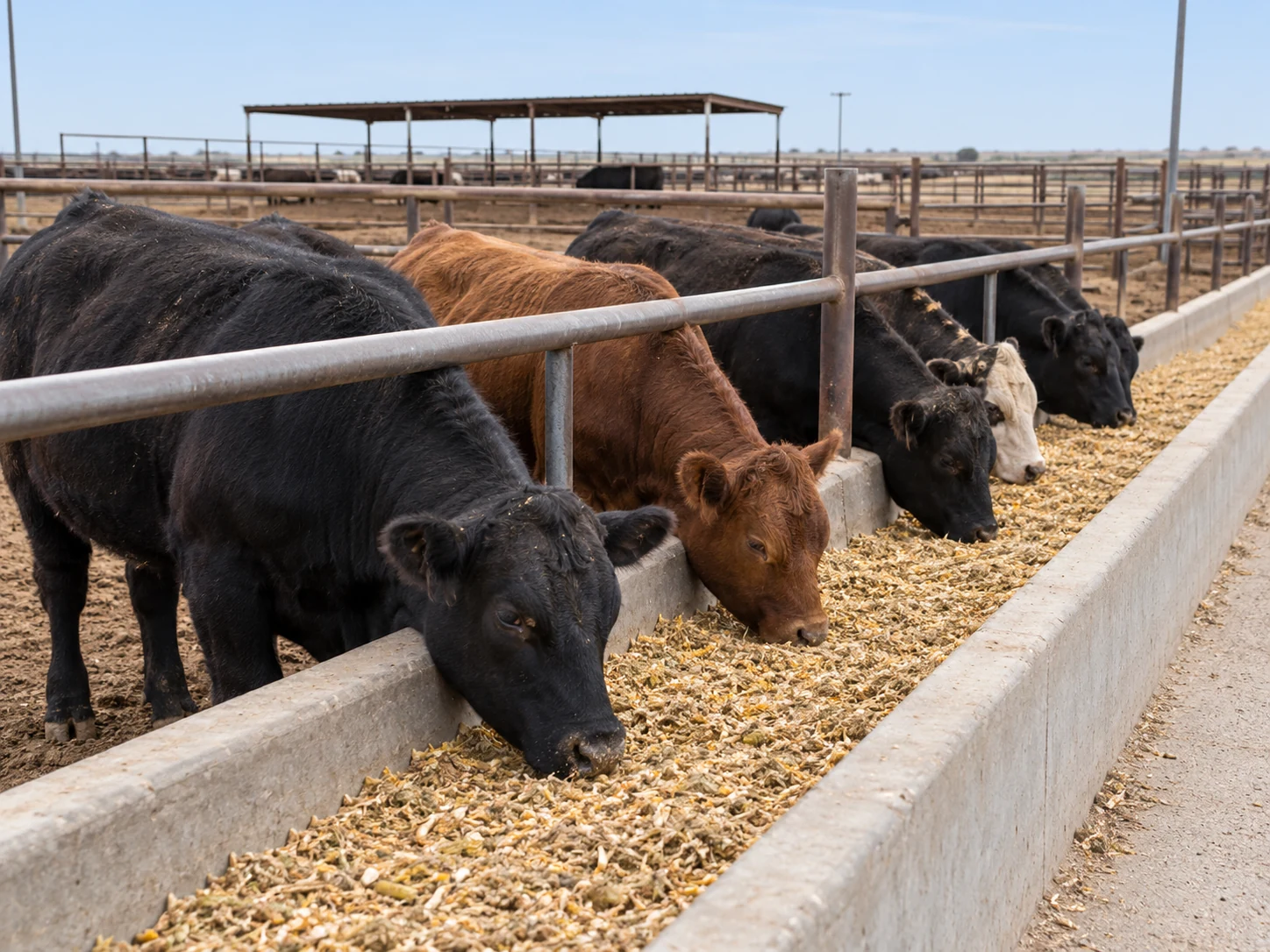
    Illustration of beef cattle eating from a concrete feed bunk beside an open feedlot pen.
    AI-generated illustration of a feedlot scene; not a Simply Pasture partner farm or an assessment of a particular operation.

    Drive past a large feedlot and it can look like the entire story of a beef animal: rows of cattle, feed bunks and open pens. In most U.S. beef systems, though, the feedlot is a finishing stage – not the animal’s whole life. Cattle commonly begin in a cow-calf operation and may spend additional time in a stocker or backgrounding program before entering a feedlot. [1, 2]

    That distinction matters because words such as feedlot, grain-fed, grass-fed and CAFO describe different things. One refers to a production stage, another to diet, and another is a regulatory category. Understanding what happens during the finishing stage makes those labels much easier to interpret.

    The feedlot usually comes near the end

    USDA’s Economic Research Service broadly divides the U.S. beef industry into cow-calf production and cattle feeding. USDA’s 2021 national feedlot study found that, among cattle brought in from outside the feedlot operation, slightly more than half came directly from a cow-calf, stocker or backgrounding operation, while a large share also arrived through sale barns. [1, 2]

    USDA uses “days on feed” for the period from placement in a feedlot until the animal leaves for slaughter. There is no single universal number. Starting age, weight, genetics, health, diet, weather and the target market can all change how long an animal remains on feed. [2]

    That is why a statement such as “feedlot cattle spend five months there” can be true for a particular group without being a definition of feedlot beef generally.

    Feedlot and CAFO are not the same word

    People often use feedlot and CAFO interchangeably, but the terms are not identical. Under EPA rules, an animal feeding operation is a facility where animals are confined and fed or maintained for at least 45 days in a 12-month period and where vegetation is not sustained over the confinement area during the normal growing season. A concentrated animal feeding operation, or CAFO, is an animal feeding operation that also meets additional regulatory criteria. [3]

    So “feedlot” describes a type of cattle-feeding system. “CAFO” is a Clean Water Act regulatory category. The distinction becomes important when discussing manure, runoff and permitting.

    Arrival is more than opening a gate

    Moving cattle from one operation to another can be stressful, and animals from different sources may arrive with different vaccination and health histories. USDA notes that preconditioning before shipment can include vaccination, castration, dehorning when needed, deworming and teaching calves to eat from a bunk and drink from a water tank. [2]

    At the feedlot, arrival processing can include identification, health assessment, vaccinations, parasite treatment and other procedures appropriate to the cattle. Antibiotics may be used for disease treatment, control or prevention in some situations, but that does not mean every animal entering a feedlot automatically receives an antibiotic. In USDA’s 2021 feedlot study, most feedlots reported using a veterinarian. [2]

    The diet changes gradually

    The common picture of cattle moving from grass straight to a pile of corn misses an important part of feedlot nutrition: adaptation.

    Finishing diets are energy-dense, but they still contain more than grain. Oklahoma State University describes contemporary finishing rations as potentially including cereal grains, roughage such as hay or silage, protein and mineral supplements, and by-product feeds such as distillers grains or corn gluten feed. The exact proportions vary by ration and available ingredients. [4]

    Cattle are normally stepped up from a higher-roughage diet toward the final higher-concentrate ration over a period of weeks. That transition helps the rumen adjust and lowers the risk of digestive problems such as acidosis. Even final finishing diets generally retain some roughage for rumen health. [4]

    Why use a feedlot at all?

    The basic reason is controlled finishing. A high-energy ration can support faster weight gain and more efficient conversion of feed into body weight than a lower-energy forage diet. Feedlots also allow nutrition, feed delivery and groups of cattle to be managed in a relatively consistent way. [1, 4]

    There is a tradeoff: increasing dietary energy and rapidly fermentable carbohydrate makes feed management more important, not less. The goal is not simply to provide as much grain as possible; the ration has to balance energy, roughage, protein, minerals and animal health.

    Antibiotics and growth implants are different tools

    Two practices that are often grouped together by consumers are actually different. Antibiotics are drugs used to address bacterial disease. USDA notes that medically important antibiotics can no longer be used for growth promotion in food-producing animals, and their use in feed or water requires veterinary oversight under current federal policy. [2]

    Growth-promoting ear implants are a separate category. FDA has approved certain steroid hormone implants for beef cattle to increase growth rate and feed efficiency. They are placed under the skin of the ear and must be used according to the approved label. Not every beef program uses implants, and “no added hormones” is a separate production claim that must be supported when it appears on a meat label. [5, 7]

    The manure is concentrated too

    When animals graze, manure is deposited across the landscape. In a feedlot, feed and cattle are concentrated in one location, so manure is concentrated there as well. That creates a different management problem.

    Open lots can require scraping, drainage, runoff controls, storage and planned land application of manure nutrients. EPA requires nutrient-management planning for CAFOs covered by its permitting rules. Pen conditions can change substantially with weather, drainage, stocking and maintenance, which is why a single photograph is a poor substitute for understanding how a particular feedlot is managed. [3, 6]

    What the label can – and cannot – tell you

    A feedlot tells you something about where cattle were finished. A grain-fed claim tells you something about diet. A “no antibiotics” or “no added hormones” claim tells you about a treatment protocol. Those are separate questions.

    USDA FSIS evaluates animal-raising claims such as grass-fed, raised without antibiotics and pasture-raised based on supporting documentation. A diet claim by itself does not describe every housing condition the animal experienced, and a housing description does not automatically tell you the complete diet. [7]

    For consumers who want more transparency, useful questions are: Where did the cattle spend the earlier part of their lives? What was the finishing diet? How long were they in confinement? Were growth implants used? How were sick animals treated? How was manure managed?

    The feedlot stage is only one chapter in the animal’s production history. Understanding that chapter is more useful than treating “feedlot,” “grain-fed” or “grass-fed” as shorthand for the entire way an animal was raised.

    Sources and further reading

    1. Cattle & Beef. USDA Economic Research Service.
    2. Management Practices on U.S. Feedlots, 2021. USDA APHIS, National Animal Health Monitoring System · 2024.
    3. Animal Feeding Operations (AFOs). U.S. Environmental Protection Agency.
    4. Finishing Beef Cattle On The Farm. Oklahoma State University Extension.
    5. Steroid Hormone Implants Used for Growth in Food-Producing Animals. U.S. Food and Drug Administration.
    6. Understanding Nutrient Management Plans. U.S. Environmental Protection Agency.
    7. FSIS Guideline on Substantiating Animal-Raising or Environment-Related Labeling Claims. USDA Food Safety and Inspection Service · 2024.
  • Are Livestock Feed By-Products Really Garbage?

    Learn / Life on the Farm / Are Livestock Feed By-Products Really Garbage?

    Life on the Farm

    Are Livestock Feed By-Products Really Garbage?

    An ingredient left from making food can still feed an animal. Its value depends on the ingredient, the animal and how it is handled.

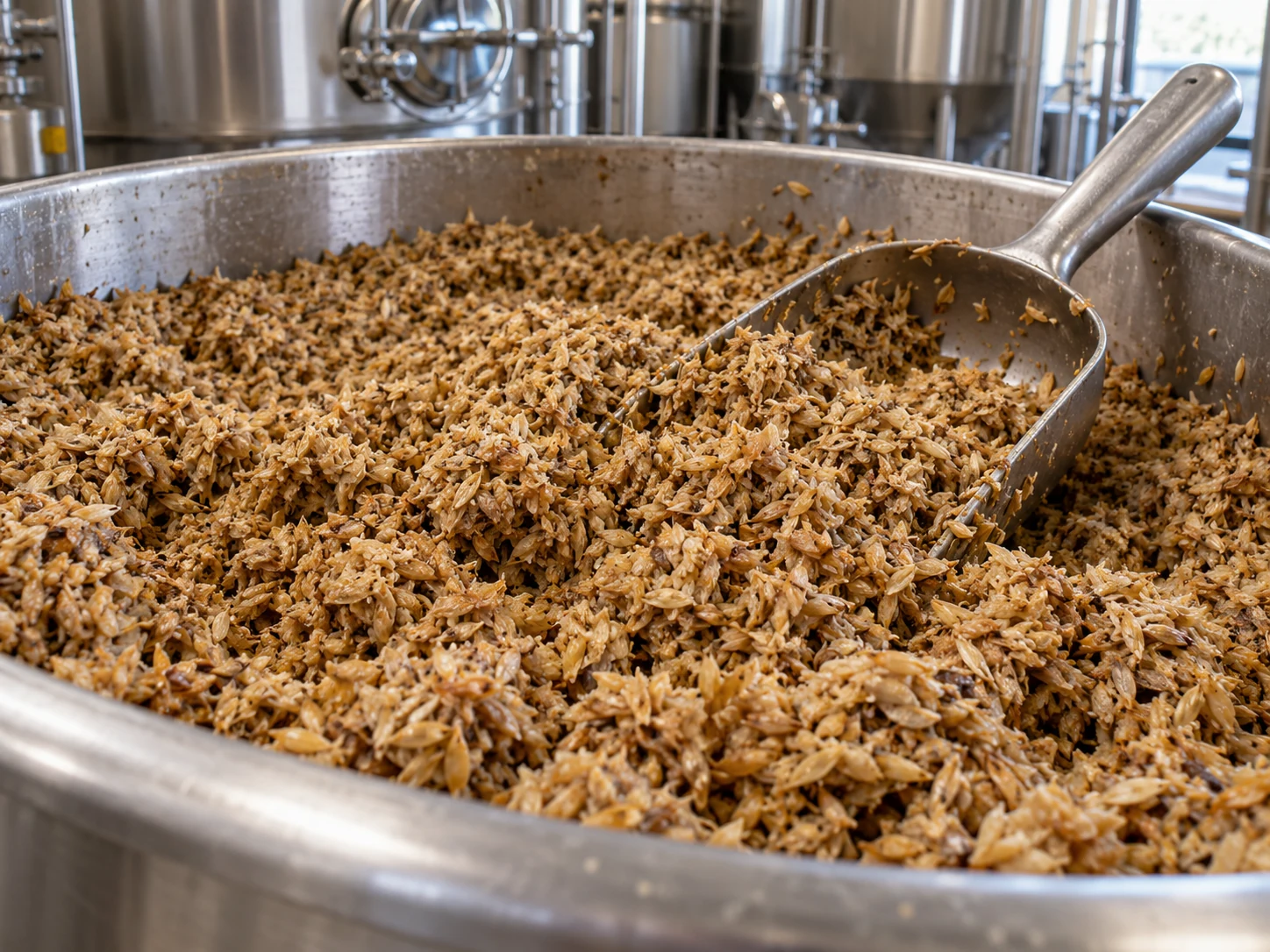
    Illustration of moist spent barley grain in a stainless steel container with a scoop and brewery equipment behind it.
    AI-generated illustration of spent-grain handling; not a photographed supplier or a measured feed sample.

    Read a livestock ration and you might see ingredients such as brewers grains, beet pulp, soybean hulls, corn gluten feed or distillers grains. To a shopper, some of those names can sound like leftovers that should have gone in the trash.

    In animal nutrition, however, a by-product is not automatically garbage. It usually means a secondary material left after another product has been made. Some of those materials still contain useful protein, energy, fiber or minerals. The more important questions are what the ingredient is, which animal is eating it, how much is being fed and how safely it is handled. [1, 2]

    What does “by-product” actually mean?

    Penn State Extension defines by-product feeds as secondary materials generated while manufacturing a principal product, often for human consumption. FDA uses examples such as wet spent grains from brewing, fruit and vegetable peels, and liquid whey from food processing. [1, 2]

    That does not mean the material has no nutritional value. Brewing removes portions of a grain that are useful for making beer, but the remaining wet grains still contain protein and fiber. Processing sugar beets leaves beet pulp, which can be a useful source of digestible fiber. Ethanol production removes much of the starch from corn and leaves distillers grains containing concentrated protein, fiber, fat and minerals. [1, 3]

    The word describes where an ingredient came from. It does not, by itself, tell you whether the ingredient is nutritious, appropriate or safe.

    Why would a farmer feed it?

    A balanced ration has to supply the nutrients an animal needs. A by-product may fill one of those nutritional jobs at a competitive cost. Penn State notes that different by-products can provide energy, protein, fiber or fat, depending on how the original food was processed. [1]

    Oklahoma State University lists dozens of by-product feeds used in cattle diets, from brewers grains and beet pulp to soybean hulls and wheat middlings. Their nutrient profiles are very different. Some are energy-dense; others are fibrous; some contribute substantial protein. That is why “contains by-products” is not a meaningful nutritional judgment without knowing the actual ingredients and the complete ration. [3]

    Local availability matters too. A brewery, sugar processor, flour mill or ethanol plant can produce a large stream of material that might otherwise have fewer uses. Feeding an appropriate co-product or by-product can recover nutrients from that stream while reducing the amount of more expensive feed a farm has to purchase. Wet products, however, can be expensive to transport and can spoil if they are not stored and managed correctly. [1, 3]

    Cattle can use some foods humans cannot

    Ruminants such as cattle have another advantage: microorganisms in the rumen ferment fibrous carbohydrates that people cannot digest efficiently. That microbial fermentation produces compounds the animal can use for energy and helps cattle obtain nutrition from forages and fibrous feed ingredients. [4]

    This is one reason cattle can make useful food from materials such as soybean hulls, beet pulp and other fibrous ingredients that are not normally part of the human diet. It does not mean every by-product is appropriate for cattle, or that cattle should be fed whatever is available. The ration still has to provide effective fiber, adequate protein, minerals, vitamins and the right amount of energy. [3, 4]

    “By-product” does not mean “anything goes”

    Feed ingredients can vary considerably from one load to another. Oklahoma State warns that variation among by-products can be substantial and recommends testing feeds for nutrient composition rather than relying only on average book values. Wet feeds can also vary greatly in moisture, which changes how much actual nutrient an animal receives per pound of material. [3]

    There are safety concerns as well. FDA monitors biological, chemical and physical hazards in animal food, including bacteria, mycotoxins and other contaminants. Covered animal-food facilities are subject to current good manufacturing practices, and many must evaluate hazards and use preventive controls under the Food Safety Modernization Act. Human-food processors supplying by-products for animal food have specific handling requirements intended to prevent contamination. [2, 5]

    Federal rules also prohibit certain animal-derived materials from particular feeds. FDA restricts certain mammalian proteins in ruminant feed and prohibits specified high-risk cattle materials in feed for all animal species to reduce the risk of bovine spongiform encephalopathy, or BSE. So the idea that livestock feed is simply an unregulated destination for unwanted material is inaccurate. [6]

    The species matters

    A feed that works well for cattle may be a poor choice for chickens or pigs. Ruminants rely heavily on microbial fermentation in the rumen. Poultry and swine are nonruminants and have different digestive systems and more specific requirements for digestible amino acids and other nutrients. [4, 7]

    Even within one species, the appropriate ration changes with age, growth, pregnancy, lactation and production goals. A useful feed ingredient becomes useful only when it is part of a ration designed for the animal eating it.

    A better question for consumers

    If a farm says it uses by-product feeds, asking “Are you feeding waste?” will not tell you very much. Better questions are: What are the ingredients? Why are they included? What nutrients do they provide? Is the ration tested or formulated by someone qualified? How are wet ingredients stored? And what portion of the animal’s diet is forage, grain or other feed?

    Some feed by-products are genuinely useful ingredients. Others may be unsuitable, inconsistent or poorly handled. The name alone does not decide which is which.

    The useful distinction is not “whole food” versus “garbage.” It is whether each ingredient is safe, nutritionally appropriate for that species and used as part of a balanced feeding program.

    Sources and further reading

    1. Concentrates for Dairy Cattle. Virginia A. Ishler and Carly Becker · Penn State Extension · 2023.
    2. FSMA Final Rule for Preventive Controls for Animal Food. U.S. Food and Drug Administration.
    3. Nutritive Value of Feeds. Oklahoma State University Extension.
    4. From Feed to Milk: Understanding Rumen Function. Penn State Extension · 2016.
    5. Biological, Chemical, and Physical Contaminants in Animal Food. U.S. Food and Drug Administration.
    6. How Do I Start an Animal Food Business?. U.S. Food and Drug Administration.
    7. Nutrient Requirements of Beef Cattle. Oklahoma State University Extension.
  • Why Do Meat Chickens Grow So Fast?

    Learn / Life on the Farm / Why Do Meat Chickens Grow So Fast?

    Life on the Farm

    Why Do Meat Chickens Grow So Fast?

    Breeding changed the bird. Feeding and everyday care shape how that bird grows—and how comfortably it lives.

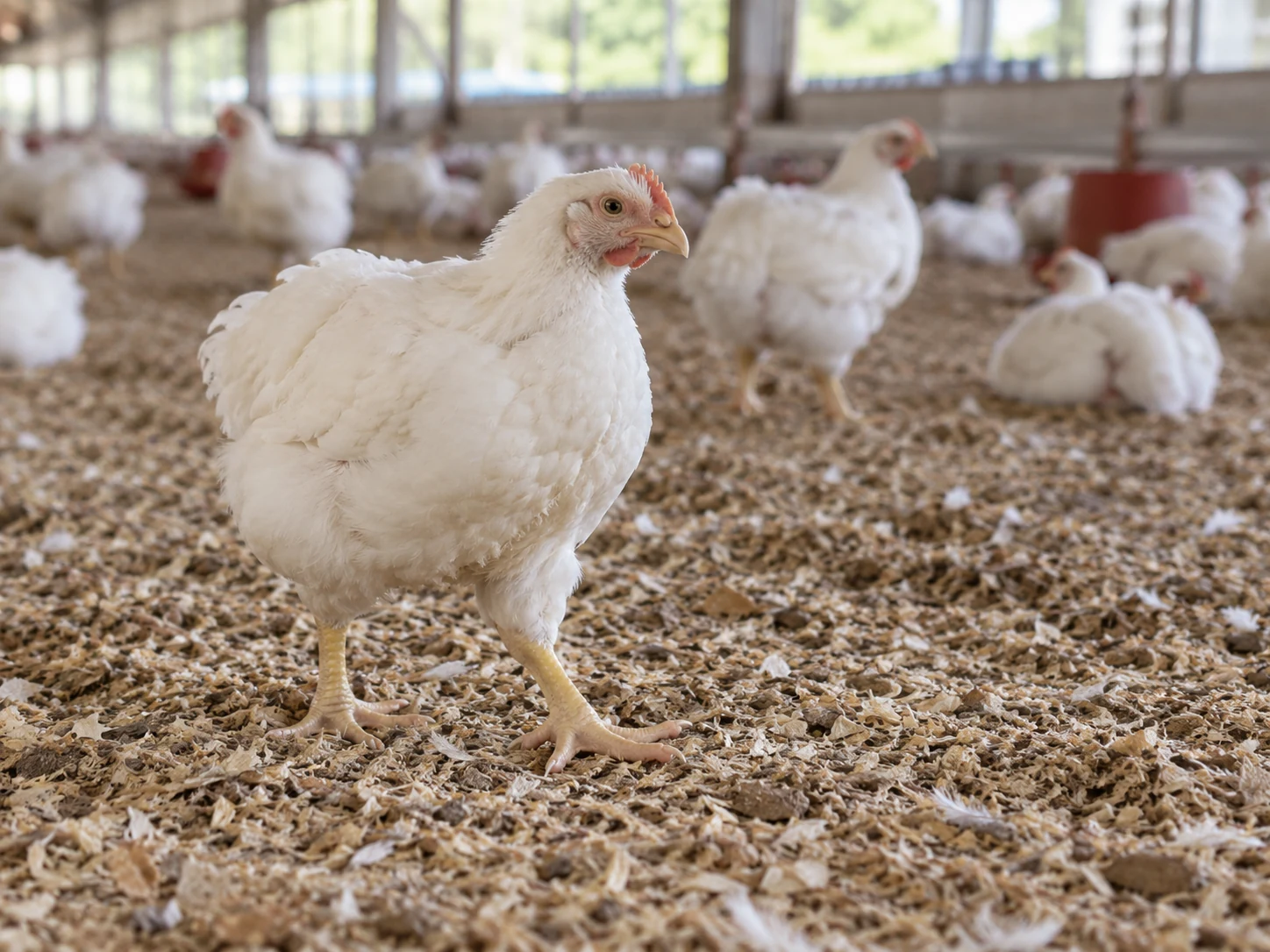
    Illustration of a white meat chicken walking on dry litter inside a poultry house.
    AI-generated illustration of a poultry-house scene; not a Simply Pasture partner farm or a study photograph.

    When a chicken breast nearly fills a dinner plate, it is reasonable to wonder how the bird got so big. Was it the feed? Added hormones? Or simply a different kind of chicken?

    The main explanation is selective breeding, supported by nutrition and daily care. Meat chickens have been developed to grow quickly and use feed efficiently. But growth and a comfortable life are not the same thing. [2, 3]

    The biggest change started before the farm

    Meat chickens, often called broilers, are bred for meat production. Selecting parent birds for desired traits over generations changes what their offspring can do. Important traits include growth rate, feed efficiency, and breast-muscle yield. [1, 3]

    In a study published in 2014, researchers raised 180 chicks from each of three lines: two preserved without commercial selection since 1957 and 1978, and a commercial line from 2005. All received the same contemporary feeding program and were followed to 56 days. [1]

    The newer line grew much more and needed less feed per unit of weight gained. These were experimental comparisons, not a survey of every farm. But they show why a large broiler is not simply an old-fashioned chicken getting extra dinner. [1]

    Feed and daily care still matter

    A bird cannot build its body from breeding alone. University of Kentucky poultry guidance explains that prepared broiler feeds supply the nutrients growing chickens need, with formulations changing as the birds develop. Clean water, suitable temperatures, and adequate access to feeders also matter. [3]

    Yet the same feed does not make every chicken grow alike. A University of Guelph study published in 2021 compared 7,528 birds from 16 genetic strains under standardized conditions. At 48 days, the conventional group was roughly 1.8–2.8 pounds heavier than the slower-growing groups. The birds shared the same feeding and management program. [2]

    It is not a sign of added hormones

    In the United States, hormones are not allowed in raising poultry. USDA says a “no hormones added” claim must be accompanied by a statement explaining that federal regulations prohibit their use. That claim does not distinguish a slower-growing chicken from a faster-growing one. [4]

    An antibiotic claim answers a different question, too: whether the birds received antibiotics, not which strain they came from or how quickly they grew. Breed, medication, and living conditions should not be treated as interchangeable descriptions. [4]

    What rapid growth can mean for the bird

    Researchers assess welfare through walking tests and checks of skin condition—not just the number on a scale. [6]

    A 2020 study compared 1,600 birds from three faster-growing breeds and one slower-growing breed, all housed indoors. The slower-growing birds were more active and had better walking scores and less hock burn, a form of skin damage around the joints above the feet. [5]

    In that experiment, 26–37% of the faster-growing birds scored at least 3 on a walking scale running from 0 to 5, where higher scores mean greater impairment. The figure was 10% for the slower-growing birds. Those are study findings, not estimates for every chicken farm. [5]

    The study received Farm Animal Welfare Forum funding through the RSPCA and used the RSPCA’s welfare protocol. The paper reports that funders did not collect or analyze the data. [5]

    The results give consumers a reason to care about breeding. They do not support the claim that every fast-growing chicken is unable to walk.

    A slower bird still needs good care

    A 2022 analysis from the same University of Guelph research program examined mobility and skin health across 14 strains. The researchers concluded that both body weight and growth rate influenced walking ability, while wet litter was an important factor in skin lesions. Changing the bird does not remove the need to manage its surroundings. [6]

    Nor does every welfare measure move together. The 16-strain study found no overall mortality difference between growth categories. Survival alone does not answer questions about movement or skin health. [2, 6]

    Why slower growth can cost more

    In the 2020 comparison, the slower-growing breed needed about two additional weeks to reach a similar weight and consumed more feed. Those extra inputs help explain why slower growth can cost more. [5]

    What to look for when buying chicken

    Look beyond a single reassuring phrase. For a slower-growth claim, useful information includes the named breed or strain, how the producer defines slower growth, and the age and weight at processing.

    Then look for a separate explanation of daily care: space, bedding, opportunities for activity, and how health problems are handled. A growth-rate description is not a complete picture of the farm.

    The goal is not simply a bird that takes longer to grow. It is a bird that can grow well and live well—and a producer willing to explain how both are being addressed.

  • Who Actually Owns the Chickens on a Chicken Farm?

    Learn / Life on the Farm / Who Actually Owns the Chickens on a Chicken Farm?

    Life on the Farm

    Who Actually Owns the Chickens on a Chicken Farm?

    The farm and the flock can belong to different businesses. That changes who supplies the feed, makes decisions and carries the risk.

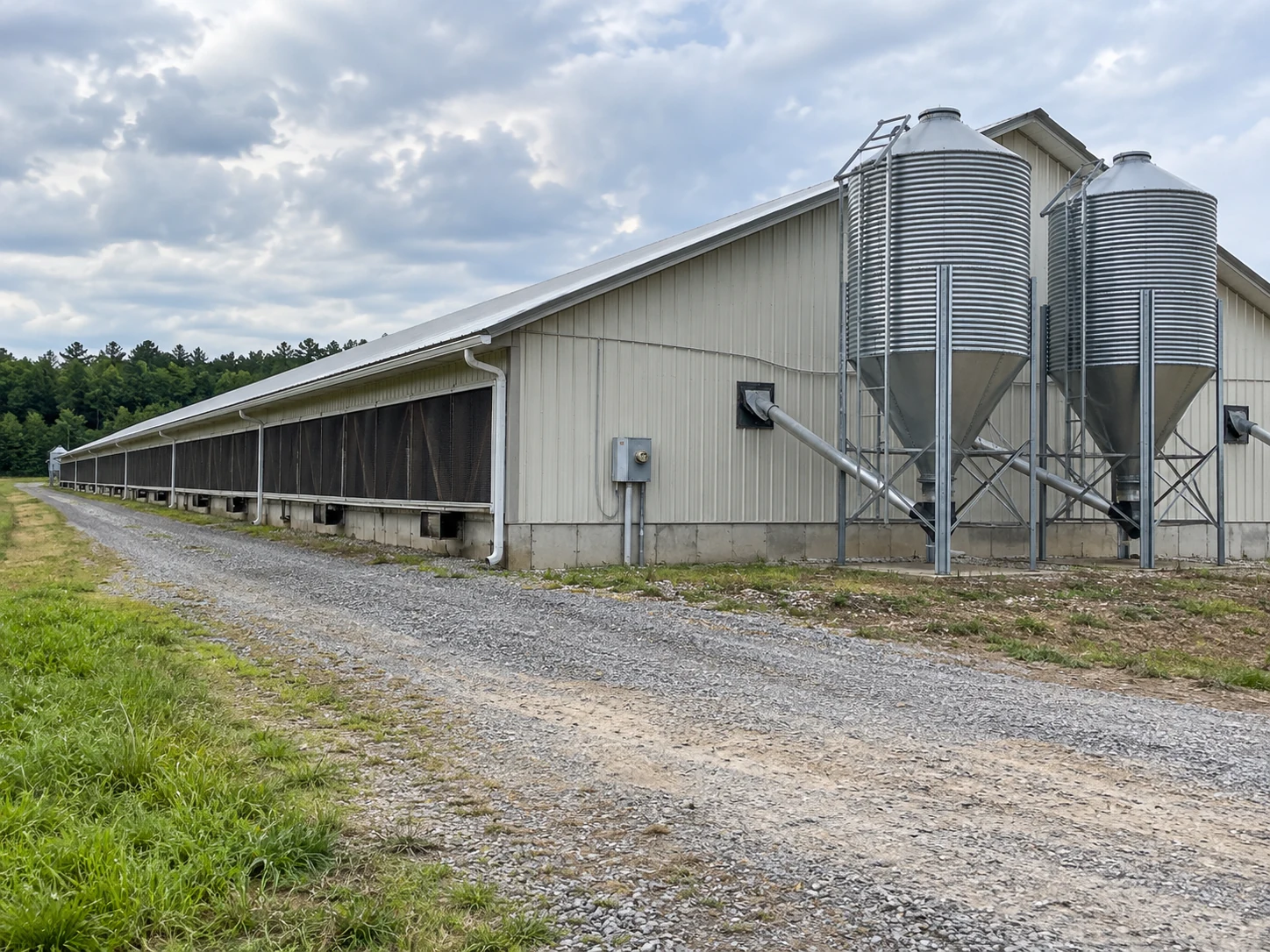
    Illustration of a long poultry house with two metal feed bins and a gravel service lane.
    AI-generated illustration of poultry-farm infrastructure; not a Simply Pasture partner farm.

    Drive past a chicken farm and the answer seems obvious: the farmer owns the farm, so the farmer must own the chickens. In much of U.S. broiler production, that is not how the business works.

    A contract grower can own the land, the poultry houses, the equipment and the utility bills while a separate chicken company owns the birds. USDA calls this a production contract. The farmer is being paid to raise someone else’s chickens. [1, 4]

    The farm and the flock can have different owners

    USDA’s Agricultural Marketing Service defines a poultry contract grower as the person who provides housing, equipment, labor, litter, power and heat and cares for the birds during growout. The grower does not own the poultry; the grower receives a fee for raising them. [1]

    This arrangement is not a small corner of the industry. In the 2022 Census of Agriculture, contract growers accounted for 73% of farms with broilers but 97% of broiler production. Independent growers and companies raising birds on their own farms made up the remainder. [2]

    That creates a distinction consumers rarely see on a package: who owns the farm is not necessarily the same as who owns the animals.

    Who provides what?

    In a typical broiler production contract, the chicken company—often called the integrator—provides the chicks, feed, transportation, veterinary services and technical guidance. The farmer supplies the buildings, equipment, utilities and labor needed to raise the flock. [3]

    The company may therefore make or heavily influence decisions that shoppers might assume belong entirely to the farmer: which chicks arrive, what feed is supplied, technical production expectations and when the flock is picked up for processing. The grower, meanwhile, is responsible for the day-to-day work of maintaining the houses and caring for the birds within the production system laid out by the contract. [1, 3]

    Neither side is simply a landlord. The company owns valuable animals and supplies expensive inputs. The grower is responsible for the physical place where those animals live and for managing that environment every day.

    Why would a farmer agree to that?

    Production contracts can solve a real business problem. Instead of raising thousands of chickens and then searching for a buyer, a grower begins with a company already committed to supplying birds and receiving them for processing. USDA notes that agricultural contracts can help farmers manage income risk, secure a market for what they produce and support financing. [4]

    The arrangement also shifts some major risks to the integrator. The company owns the birds and generally supplies feed and other important inputs. But the farmer takes on a different kind of risk: poultry houses and equipment can require substantial long-term investment, while the grower continues paying for labor, utilities, maintenance and other farm costs. [3, 5]

    So “contract farming” does not mean the farmer has no business at stake. It means the risks and responsibilities are divided between two businesses.

    How does the farmer get paid?

    Many broiler contracts have historically used a ranking system often called a tournament. USDA’s 2020 survey describes growers being compared with other growers delivering birds to the same company around the same time. Performance measures can affect whether a grower receives more or less than a base payment. [3]

    The resulting payments can vary considerably. That does not mean every company uses the same formula, and contract terms can change. Federal rules require poultry growing arrangements to explain how compensation is determined, how long the contract lasts and the conditions under which it can be ended. [5]

    Since February 2024, additional federal transparency requirements for broiler contracts have also required certain disclosures, including the minimum number of flock placements per year and minimum stocking density for each flock. [6]

    Can it still be a family farm?

    Yes. “Family farm” and “contract farm” describe different things.

    USDA’s 2022 poultry and egg snapshot reports that 97% of farms specializing in poultry and egg production were family farms. That statistic covers a broader group than broiler contract growers, so it should not be read as saying that 97% of contract broiler farms are family farms. But it shows why a family-owned farm and a highly coordinated corporate supply chain can exist at the same time. [2]

    A family may own the acreage and poultry houses, do the daily work and carry farm debt while raising birds owned by a large poultry company.

    Why this matters when you buy chicken

    A picture of a farmer on a package can tell you something about who raised the bird, but it may tell you very little about who chose the genetics, supplied the feed, set production requirements or owned the chicken.

    That does not automatically make contract production good or bad. It means “who is the farmer?” is only one transparency question.

    If you want to understand how a chicken was actually raised, better questions include: Who owned the birds? Who supplied the feed? Who set the stocking and production requirements? What decisions could the farmer make independently? Who processed the chickens after they left the farm?

    The surprising answer is that there may be two businesses behind one chicken: the farmer who owns and operates the farm, and the company that owns the flock and coordinates much of the production system. Knowing the difference gives consumers a clearer picture of where their food really comes from.

    Sources and further reading

    1. Livestock, Poultry and Grain Poultry and Egg Terms. USDA Agricultural Marketing Service.
    2. 2022 Census of Agriculture: Poultry and Egg Production Highlights. USDA National Agricultural Statistics Service · 2024.
    3. Fees paid to growers for raising broiler chickens varied widely in 2020. USDA Economic Research Service · 2022.
    4. Farm Structure and Contracting. USDA Economic Research Service.
    5. Growers’ Rights in Poultry Growing Arrangements. USDA Agricultural Marketing Service.
    6. FAQ for Transparency in Poultry Grower Contracting and Tournaments Final Rule. USDA Agricultural Marketing Service · 2024.
  • Why Does Grass-Finished Beef Often Cost More?

    Learn / Life on the Farm / Why Does Grass-Finished Beef Often Cost More?

    Life on the Farm

    Why Does Grass-Finished Beef Often Cost More?

    A pasture is only part of the picture. Time, land, winter feed and processing all shape what beef costs.

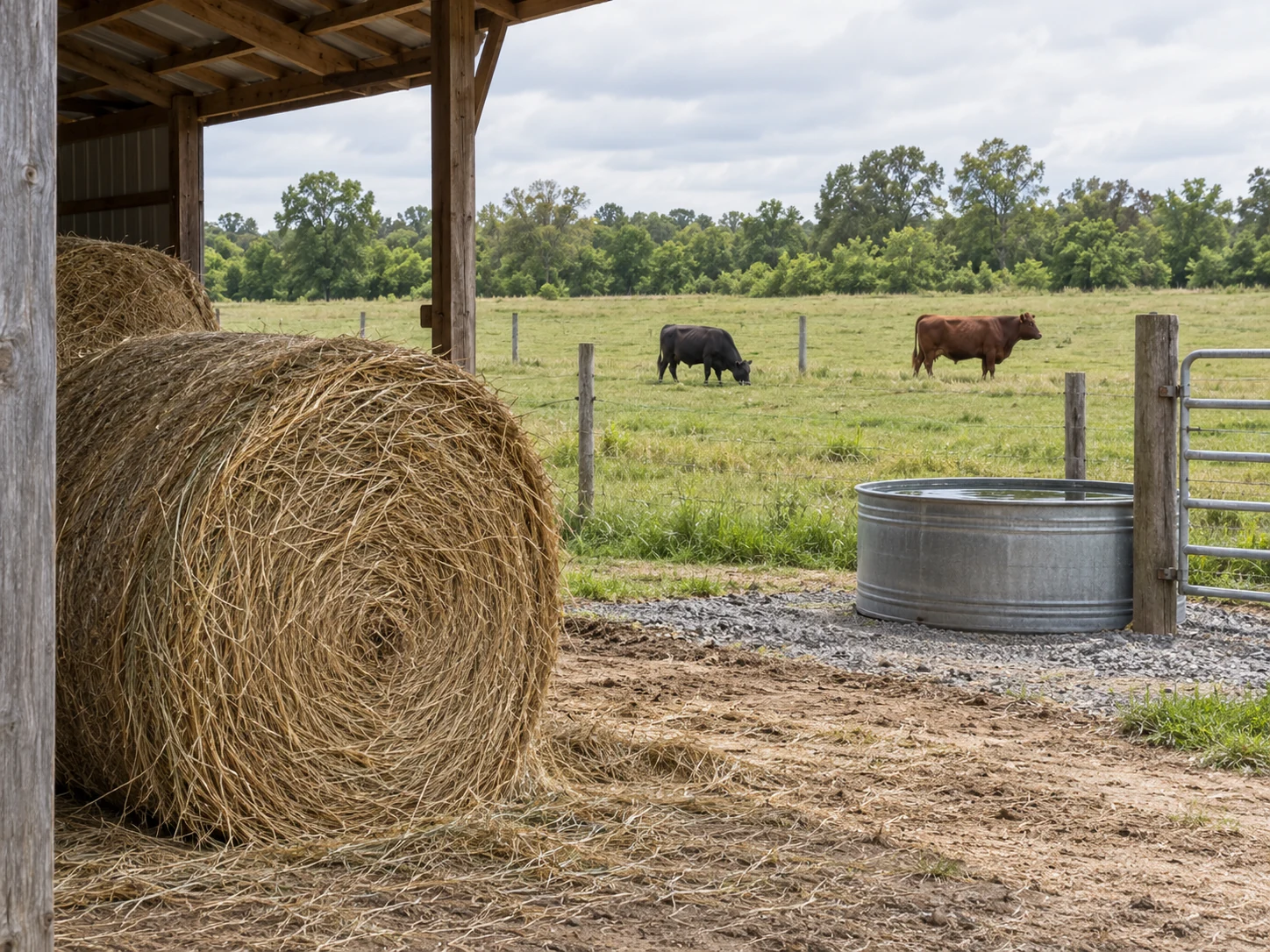
    Illustration of hay bales under a farm shed, a water trough and fencing, with two beef cattle on pasture beyond.
    AI-generated illustration of farm infrastructure and stored forage; not a Simply Pasture partner farm.

    At the meat counter, a higher price can raise a fair question: if the cattle ate grass instead of purchased grain, why does the beef sometimes cost more?

    The bill covers much more than feed. Land, time, meat yield, and the work of getting beef to customers all affect the price. [1, 3, 5]

    First, what are we comparing?

    Here, we are looking at cattle finished on grass and other forage rather than grain. Finishing is the final growth stage before slaughter, when the aim is to reach a suitable weight and level of fat—not simply keep an animal alive. [2]

    And forage does not have to mean fresh grass every day. Hay and other stored forages can help feed cattle when grazing is unavailable. [1]

    Grass grows. Good pasture takes work.

    A field may look self-sufficient, but someone has to pay for the land, maintain fences and water systems, and manage the plants. A Penn State-led farm survey counted pasture maintenance, equipment, fencing, winter feed, and land among the costs of pasture-finished beef. [3]

    The grass also has to provide enough nutrition. Penn State Extension explains that forage quality changes with plant maturity and how it is grazed or harvested. A tall field is not necessarily a field of high-quality feed. [1]

    Practical Farmers of Iowa’s finishing guidance emphasizes matching cattle genetics, forage resources, and grazing management. Farmers have to watch both the animals and the pasture, including giving grazed areas time to recover. [2]

    A longer growing period has a cost

    Grain provides concentrated energy that can support faster weight gain during finishing. A forage-only system may need more time, particularly when the available forage cannot support the same growth rate. There is no single timetable that describes every farm. [1, 2]

    That extra time can mean more days of feeding and care before the farmer receives payment. The Penn State project also identified keeping cattle too long before harvest as a problem for profitability on participating farms. [3]

    In the Northeast, Penn State notes that year-round grazing is rarely possible, so stored forage fills the gap. Finishing through another winter can therefore bring another feeding bill—not a season of free grass. [1]

    The number of pounds matters, too

    A live animal’s weight is not the weight of the beef eventually sold. Dressing percentage describes the share of live weight remaining as a carcass after slaughter; that carcass still includes bone and fat, rather than only packaged cuts. [4, 5]

    In a California study published in the Journal of Animal Science in 2022, researchers compared four feeding systems. The conventional grain-finished group had a higher final live weight and dressing percentage than either all-grass group. The all-grass systems also had higher calculated break-even costs per kilogram of carcass. The results apply to those systems, not all farms or current retail prices. [4]

    The business implication is simple: when there are fewer saleable pounds to spread a given cost over, the cost per pound rises.

    Some costs happen after the farm

    Even after an animal is ready, there are bills for slaughter, cutting, transportation, and selling the beef. The Pasture Project’s grass-fed beef calculator treats those as separate costs, including a per-animal slaughter fee and per-pound processing charges. [5]

    For a farmer selling directly, eliminating a middleman does not eliminate those jobs. Processing still has to be arranged, the beef has to reach customers, and sales take time. The farmer may be doing more of that work personally. [3, 5]

    These costs are not unique to grass-finished beef. The scale and organization of the business also matter; “grass-finished” does not describe the size of the farm or its supply chain. [5, 6]

    Could the premium become smaller?

    Yes—at least in some systems. Cornell’s account of a 2026 study describes an analysis using survey data from 31 farms and production facilities in New York and New England. Its expanded-operation scenario modeled a 24% reduction in production costs compared with smaller-scale operations. The researchers also suggested cooperation among farms as a route to scale. [6]

    That is a regional model, not a promised discount on your next purchase. But it offers a useful counterpoint: making grass-finished beef more affordable does not necessarily mean changing what the cattle eat. Coordination and how the supply chain operates matter, too. [6]

    What are you paying for?

    A higher price can reflect real production and handling costs. It is not, by itself, proof of better care, better flavor, or a healthier product.

    When comparing options, start with the same cut and price per pound. Then look for a clear explanation of the feeding program, farm practices, and any additional services included in the price.

    You do not have to buy the most expensive beef to make a thoughtful choice. The useful question is whether the producer explains what makes the product different—and whether those differences matter to you.

    Sources and further reading

    1. Grass-fed Beef Production. Penn State Extension · 2024.
    2. Finishing Cattle on Grass: Lessons Learned from PFI. Meghan Filbert · Practical Farmers of Iowa · 2019.
    3. Adoption of grass-fed beef management practices — Final Report, LNE06-236. John W. Comerford, project leader · SARE.
    4. Grass-fed vs. grain-fed beef systems: performance, economic, and environmental trade-offs. Sarah C. Klopatek and colleagues · Journal of Animal Science · 2022.
    5. Grass Fed Beef Production: Counting the Costs. Allen Williams · Pasture Project.
    6. Northeast farmers could profit from grass-fed beef if they expand, join forces. Caitlin Hayes · Cornell Chronicle · 2026.
  • Why Do Pasture-Raised Hens Still Need Feed?

    Learn / Life on the Farm / Why Do Pasture-Raised Hens Still Need Feed?

    Life on the Farm

    Why Do Pasture-Raised Hens Still Need Feed?

    Pasture gives hens room to forage. Balanced feed helps meet needs a field cannot reliably supply.

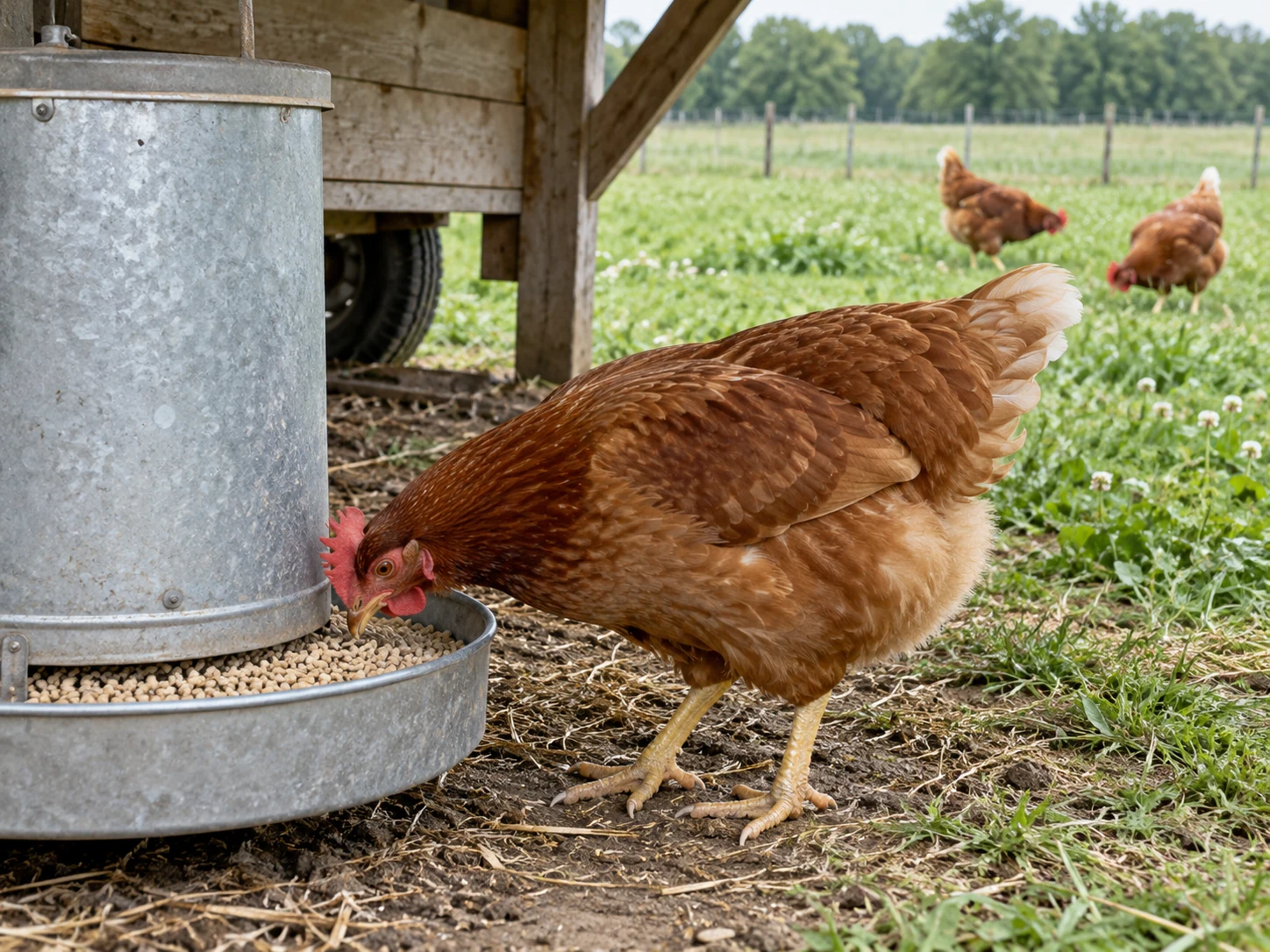
    Illustration of a brown hen eating from a metal feeder beside a shelter, with two hens foraging on pasture behind her.
    AI-generated illustration of feeding and foraging; not a Simply Pasture partner farm.

    A hen is scratching through a field, pecking at plants and searching for insects. Nearby, there is a feeder.

    Isn’t that a contradiction? If she is pasture-raised, shouldn’t she be finding all her own food?

    Not necessarily. Pasture can contribute to a hen’s diet, but it is not a dependable replacement for a balanced feeding program. Raising chickens on pasture and providing them with prepared feed can be complementary parts of caring for the same flock. [1]

    The distinction starts with understanding what a chicken actually eats.

    Chickens don’t eat like cattle

    Chickens are omnivores. Their diet can include grains, seeds, leafy plants, insects, and other small creatures. Eating grain is not, by itself, a sign that something has gone wrong with their care. University of Minnesota Extension includes grains among the foods chickens eat and recommends a prepared feed balanced for their nutritional needs. [2]

    But chickens are not grazing animals in the same sense as cattle. They do not have the digestive system that allows ruminants to make such effective use of fibrous forage. Rodale Institute’s guidance on pastured poultry explains that chickens cannot efficiently digest cellulose—the structural material in plant cell walls—and cannot rely on pasture alone. [1]

    So a hen pecking her way across a field is doing something different from a cow grazing beside her. The setting may look similar. Their nutritional needs are not.

    What’s in the feeder—and why?

    Prepared feed is meant to supply a predictable combination of nutrients, rather than leave the hen’s entire diet to whatever she finds that day.

    Corn, for example, provides digestible energy. Soybean meal can complement a corn-based diet by supplying more of the amino acids that corn provides in smaller amounts. Their presence in feed has a nutritional purpose; the ingredient names alone do not tell us whether a hen lives indoors or on pasture. [3]

    The complete mixture matters, too. A feed formulated for laying hens is not the same thing as a handful of cracked corn or mixed scratch grains. Penn State Extension cautions that those grains are not a complete diet on their own. Adding too much to a complete feed can dilute its nutritional balance rather than improve it. [4]

    Calcium is another important part of the picture. A laying hen needs it for both bone strength and eggshell quality—not just to keep producing eggs for us. Humane Farm Animal Care’s laying-hen standards specifically address both needs. [5]

    That is an important way to think about feeding: the goal is a well-nourished bird, not simply a productive one.

    How much food can a hen find on pasture?

    The words “pasture-raised” do not tell you what percentage of a hen’s nutrition comes from foraging.

    What is growing matters. University of Kentucky poultry guidance describes young, tender plants as useful sources of nutrients, while noting that chickens cannot digest old, fibrous plants well. Pasture can reduce the amount of prepared feed needed, but a field’s appearance does not tell us how much nutrition each hen is actually getting. [6]

    The season matters as well. During winter, there may be fewer insects and seeds available. At the same time, chickens can need more feed in cold weather to help maintain their body temperature. A feeding plan needs to account for the birds’ circumstances, not just the amount of land around them. [2, 7]

    For shoppers, that means a photograph of green pasture is only part of the story. It cannot tell you whether the flock’s whole diet is adequate.

    A useful lesson from pasture research

    A six-week study published in 2010 helps illustrate why feed still matters.

    Researchers compared eggs from 75 hens rotated through different pastures with eggs from 50 caged hens. The pastured birds received a measured amount of commercial feed every day; they were not living on grass and insects alone. At the end of the experiment, the pastured hens weighed less and had lower egg production than the caged comparison birds. The authors emphasized the importance of supplying enough dietary energy and protein to hens on pasture. [8]

    Those findings describe that particular experiment, not every pasture-based farm. They also do not establish that housing alone caused the differences, because the feeding arrangements differed.

    The practical lesson is that outdoor access does not remove the need to manage nutrition. Pasture and a suitable feeding program have to work together.

    Then what does pasture add?

    A hen’s environment matters for reasons beyond the food she finds there.

    An outdoor area can offer room to explore, scratch, forage, and dust-bathe. But making that space useful requires care: vegetation, shelter, protection from predators, and attention to worn or muddy ground.

    For example, Humane Farm Animal Care’s Edition 21 standards for its Certified Humane pasture-raised system require living vegetation, pasture rotation, shade, cover, and suitable housing. The same document also requires a diet formulated to meet the hens’ nutritional needs. These are requirements of that particular certification—not a promise made by every carton using the words “pasture-raised.” [5]

    That combination is the point. A balanced diet does not replace an appropriate living environment. An appropriate living environment does not replace a balanced diet.

    What this means when you buy eggs

    Don’t dismiss pasture-raised eggs simply because the hens also eat grain. But don’t assume a pasture claim tells you everything about their feed, either.

    Look for two separate explanations from the producer: how the hens live and how they are fed. A published pasture standard can describe outdoor conditions and management. Feed information can explain the ingredients and how the flock’s nutritional needs are met.

    A feeder is not evidence that pasture-based farming is fake. Nor is a grassy field, by itself, proof of good care.

    The more useful picture includes both: hens with a suitable place to live and forage, and a feeding program that keeps them properly nourished.

    Sources and further reading

    1. How to Establish a Small-Scale, Pastured Poultry Operation — Rodale Institute · 2012.
    2. Raising chickens for eggs — University of Minnesota Extension · Reviewed 2025.
    3. Corn in Poultry Diets — Jacquie Jacob, University of Kentucky · Poultry Extension.
    4. Prevention of Egg Eating in Chickens — Penn State Extension · Updated 2023.
    5. Animal Care Standards: Egg Laying Hens, Edition 21 — Humane Farm Animal Care.
    6. Feeding Chickens for Egg Production in Small and Backyard Flocks — Jacquie Jacob, University of Kentucky · Poultry Extension.
    7. Chicken feed during non-laying winter months — James Hermes · Ask Extension · 2015.
    8. Vitamins A, E and fatty acid composition of the eggs of caged hens and pastured hens — Karsten, H. D.; Patterson, P. H.; Stout, R.; Crews, G. · Renewable Agriculture and Food Systems · 2010.